
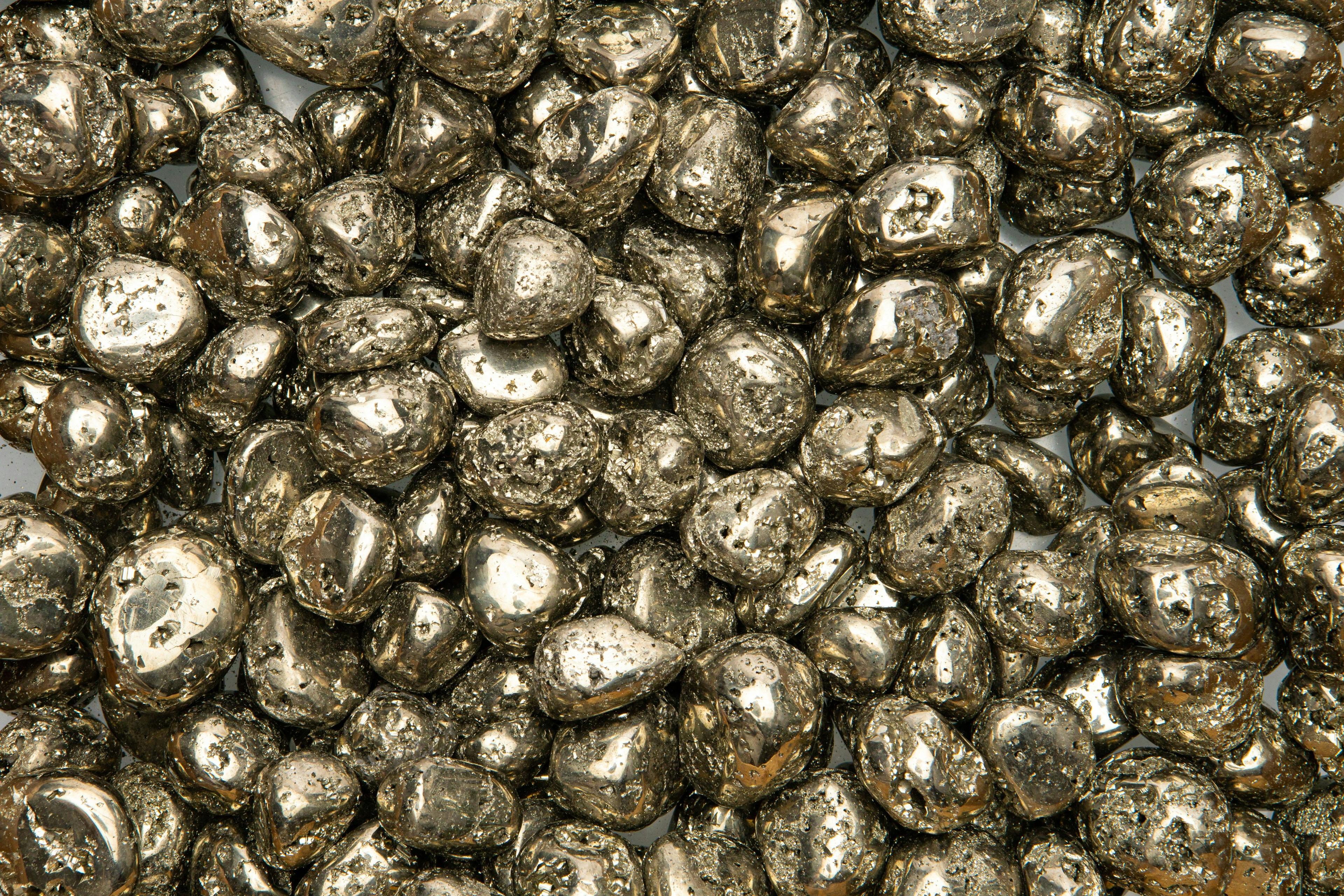
Each year, foreign investors travel to Kenya under the belief that they are entering into legitimate, high-value gold transactions. In many cases, these individuals depart having received nothing of value, or in some instances, sealed containers containing base metals such as copper, zinc, or tin that have been deliberately disguised as gold bars.
The scale of the problem is well documented. Kenyan law enforcement agencies regularly announce arrests in gold scam cases. In May 2026, the Directorate of Criminal Investigations (DCI) announced the arrest of a woman accused of defrauding an American investor of Ksh55.7 million by promising 400 kilograms of gold bars and luring him to Nairobi to "finalise" the deal. In July 2025, police arrested a Cameroonian national accused of defrauding a Canadian investor of USD 618,000 through a sophisticated fake operation complete with a counterfeit staff card for a fictitious "Sunshine Minerals Ltd." In another case investigated by the DCI, an investor paid USD 265,200 for "gold" that laboratory analysis showed was nothing more than a mixture of copper, zinc and tin.
These schemes are not perpetrated by amateurs. Rather, they are organised, systematic frauds executed by professional networks operating according to established methods. A clear understanding of these methods is essential for any prospective investor seeking to avoid victimisation. This article sets out the typical structure of such scams, identifies key warning signs, and outlines the legal remedies available to those who have suffered financial loss.
Why Nairobi? The Anatomy of a Perfect Scam Environment
Kenya is an established gold-producing jurisdiction, with mining activities concentrated in the western counties of Migori, Kakamega, Siaya, and Vihiga. The country maintains a legal framework governing mineral extraction, export, and licensing. It is this underlying legitimacy that enables fraudsters to operate from Nairobi with a veneer of credibility.
A fraudster based in a jurisdiction lacking a gold industry would find it difficult to establish credibility. In contrast, a fraudster operating from Nairobi can reference actual mining operations, legitimate gold exports, functioning refineries, and the existence of a government ministry responsible for mining. The plausibility of their narrative is derived from the presence of a genuine industry.
Fraudsters take advantage of this context by presenting themselves as licensed dealers, exporters, or intermediaries claiming to have access to artisanal miners in the gold-producing regions. Such representations appear credible on their face, as legitimate gold is indeed transported from these counties to Nairobi.
The Playbook: How the Scam Unfolds, Phase by Phase
Phase 1: The Approach
Initial contact is typically established through online platforms such as LinkedIn, WhatsApp, email distribution lists, or websites purporting to offer gold bars for sale in Kenya, gold dust for export, or gold dealing services in Nairobi. The profiles and websites are professionally presented, often displaying images of gold bars, mining operations, assay certificates, and export documentation.
Certain networks employ individuals who actively seek out potential victims in investment forums, diaspora groups, and business networks, offering purportedly exclusive opportunities to acquire gold at prices below prevailing market rates.
Phase 2: Building Legitimacy
Fraudsters devote significant resources to creating the appearance of legitimacy, including the following:
- Fake company documents: certificates of incorporation, licences, and permits that appear genuine but are forged or belong to unrelated entities
- Forged assay cePhotographic and video evidence: images depicting gold bars, purported mining operations, and offices located at prestigious Nairobi addressed bars, operations at "their" mine, a professional office in an upmarket Nairobi address
- Apparent intermediaries: individuals who represent themselves as legal practitioners, government officials, customs officers, or ministry personnel, thereby lending an additional layer of apparent credibility to the transaction
In one documented case, the fraudsters went so far as to produce a fake staff card identifying oThe price offered is invariably below the prevailing market rate. Discounts of 10 to 30 percent relative to the London spot price are common, with explanations such as the seller being a small-scale miner requiring immediate liquidity, the gold being informally sourced, or a discount being extended for bulk or cash transactions.whLegitimate gold transactions occur at or above market value. There is no lawful justification for offering refined gold bars at a substantial discount to an unknown party via the internet.et price. There is no legitimateIn order to establish trust, the fraudsters may facilitate a minor transaction, such as sending a small quantity of gold by courier or permitting an in-person inspection of a limited amount. This is a calculated tactic. The sample provided is genuine gold, often acquired from legitimate sources, whereas the purported larger stockpile does not exist.nspected in person. This is theatre. The sample is real gold (often bought over the counter); the stockpile is not.
Phase 5: The Invitation to Nairobi
At this stage, the victim is typically invited to travel to Nairobi to inspect the gold, meet with individuals presented as company directors, and execute contractual documents. The arrangements are designed to create an impression of legitimacy, including:
- Airport pickup in a good vehicle
- Meetings at impressive offices (often short-term rentals)
- A visit to a "mine or storage facility" (staged)
- Introductions to people introduced as ministry or customs officials
Upon returning home, the victim is often convinced of the transaction's legitimacy, having viewed the purported gold, met with the alleged principals, and executed documentation. However, independent verification of the transaction or the parties involved is typically lacking.
Phase 6: The Escalating Fees
Once the victim is committed, the fees begin. These are always framed as legitimate, unavoidable costs:
- Export permit fees
- "Tax clearance or anti-money laundering clearance" charges
- Customs and storage charges
- Refining or assaEach fee is accompanied by plausible explanations and supported by forged invoices and receipts, with assurances that it is the final requirement. Victims who have already made substantial payments frequently continue to pay additional sums rather than accept the loss of their initial investment. This phenomenon, known as the sunk-cost fallacy, is central to the perpetuation of the fraud.ost trap, and it is the engine of the entire scam.
Phase 7: The Switch — or the Disappearance
Ultimately, the fraudulent scheme concludes in one of several ways: the victim may demand delivery and the fraudsters abscond, or delivery may occur, only for laboratory analysis to reveal that the purported gold is in fact a mixture of base metals, occasionally plated to resemble gold. In certain instances, the shipment is allegedly seized at the airport, with further demands for payment made under the pretext of securing its release.
Red Flags: The Checklist Every Gold Buyer Should Run
Before paying anyone for gold in Kenya or anywhere else, run this checklist:
- The price is below market. Legitimate gold is never sold at a discount to strangers.
- Payment is demanded before independent verification. A real seller allows inspection and assay at a laboratory of the buyer's choosing.
- You are asked to pay "export permit fees, tax clearances, or release fees" to unlock gold you have already bought. Government fees are paid to government agencies, not to companies or individuals.
- The seller resists escrow. A legitimate dealer will accept an escrow arrangement with an independent law firm or bank.
- Documentation looks professional but cannot be independently verified. Company registration numbers, licence numbers and assay certificates can all be checked with the issuing authority and should be.
- The deal is urgent. Urgency defeats verification. Fraudsters manufacture deadlines.
- You found them, rather than the reverse. Cold approaches from "dealers" on LinkedIn, WhatsApp or email are almost always fraudulent.
- You are discouraged from involving your own lawyer. No legitimate seller objects to the buyer's legal counsel reviewing the transaction.
- The story involves government or political connections. Real officials do not broker private gold deals.
- The quantity is implausible. Offers of hundreds of kilograms of refined gold bars from a small-scale deIt should be clearly stated that victims of these schemes are often sophisticated individuals, including business owners, investors, and professionals, who have undertaken what they believed to be reasonable due diligence. The fraud is effective precisely because it is designed to circumvent standard verification procedures, utilising fabricated offices, forged documents, staged site visits, and genuine but limited test samples.y verification: fake offices, fake documents, staged mine visits, small real test deliveries.
Psychological factors also play a significant role. Once funds have been transferred, acknowledging the fraud entails accepting a financial loss, which often leads victims to continue making additional payments in the hope of recovery. Furthermore, the in-person visit to Nairobi reinforces a false sense of security, as the victim has personally observed what appeared to be a legitimate operation.
What to Do If You Have Already Lost Money in a Kenya Gold Scam
Time matters. If you have been defrauded, take these steps immediately:
1. Preserve all evidence. Retain all correspondence, including emails, WhatsApp messages, contracts, invoices, receipts, bank transfer records, flight bookings, and photographs. Do not alert the fraudsters or confront them prior to obtaining legal advice.
2. Report to the police. Gold fraud is a criminal offence in Kenya. A report to the DCI or the nearest police station creates an official record and can support both prosecution and asset tracing. Recent cases show that Kenyan law enforcement does pursue these networks.
3. Consider civil recovery proceedings. Initiating a criminal complaint does not guarantee the recovery of lost funds. Civil litigation may be pursued to target the assets of the fraudsters and, in certain circumstances, third parties who knowingly facilitated the fraud. Freezing orders (injunctions) may be obtained to prevent dissipation of assets if sought promptly.
4. Act on the money trail. If you paid by bank transfer, your bank and the receiving bank may be able to trace and, in some cases, recover funds, particularly if action i5. Obtain legal advice prior to taking further action. Many victims inadvertently compromise their position by alerting the fraudsters, entering into refund agreements that are detrimental, or making additional payments in an attempt to recover losses.fund agreements that undermine their position, or paying further fees in the hope of recovery.
At Anyega Osiemo and Co. Advocates, we advise both local and international victims of gold investment fraud on criminal complaints, civil recovery, asset tracing and freezing orders. If you have lost money to a gold scam connected to Kenya, contact us for a confidential consultation.
How to Verify a Gold Dealer in Kenya Before You Pay Anything
If you are considering the purchase of gold from Kenya, independent verification is essential and can be accomplished through the following steps:
- Verify company registration with the Business Registration Service (eCitizen). Check that the company exists, is active, and that its directors match the people you are dealing with.
- Verify any mining or mineral-dealing licence via the Ministry of Petroleum and Mining's Mining Cadastre Portal. A claimed "licensed dealer" whose licence number does not appear in the official register is not a licensed dealer.
- Insist on an independent assay at a laboratory you select yourself, not one recommended by the seller, before paying for any quantity.
- Use escrow. Payment should pass through an independent law firm or bank and be released only after verified delivery and assay.
- Engage independent Kenyan legal counsel to verify the status of the seller, review contractual documentation, and structure the transaction appropriately. The expense of legal due diligence is minimal in comparison to the potential financial loss resulting from inadequate verification.
Frequently Asked Questions
Q1. Is buying gold from Kenya legal?
A. Yes. Kenya has a legitimate gold industry and a legal framework for mineral dealing and export. The problem is not the industry; it is the fraudsters hiding behind it. Every step of a legitimate transaction can be verified through official channels.
Q2. How do I report a gold scam in Kenya?
A. File a report with the Directorate of Criminal Investigations (DCI) or at any police station, and obtain an official record of the report. You should also seek legal advice promptly about civil recovery, which runs separately from the criminal process.
Q3. Can I recover money lost in a gold scam in Kenya?
A. Recovery of lost funds is possible, but is contingent upon prompt action and the continued existence of traceable assets held by the fraudsters. Victims may utilise bank tracing, civil litigation, and freezing orders as available remedies. Timely action significantly enhances the likelihood of a successful recovery.
Q4. Are Nairobi gold dealers legitimate?
A. There are legitimate mineral dealers in Nairobi who are duly licensed to operate in Kenya. However, any dealer who initiates unsolicited contact, offers gold at prices below market value, demands advance payments, or resists independent verification should be presumed fraudulent unless proven otherwise.
Q5. What is the "gold export permit fee" scam?
A. Fraudsters may assert that gold is being held at the airport, in a warehouse, or at a refinery, and demand payment of export permit, tax, or release fees prior to delivery. In legitimate transactions, export fees are remitted directly to government agencies via official channels, and are never paid to a private company or individual in advance of a private sale.
If you have been affected by a gold scam, or require assistance in verifying a gold transaction prior to making any financial commitment, contact us for professional legal guidance.
Disclaimer: This article is general legal information, not legal advice. For guidance on your specific situation, book a consultation with our advocates.