The duration of probate proceedings is a primary concern for most families following a bereavement. Public sources often provide overly optimistic timelines, while anecdotal accounts may exaggerate delays. In reality, the time required depends on the specific circumstances of each estate.
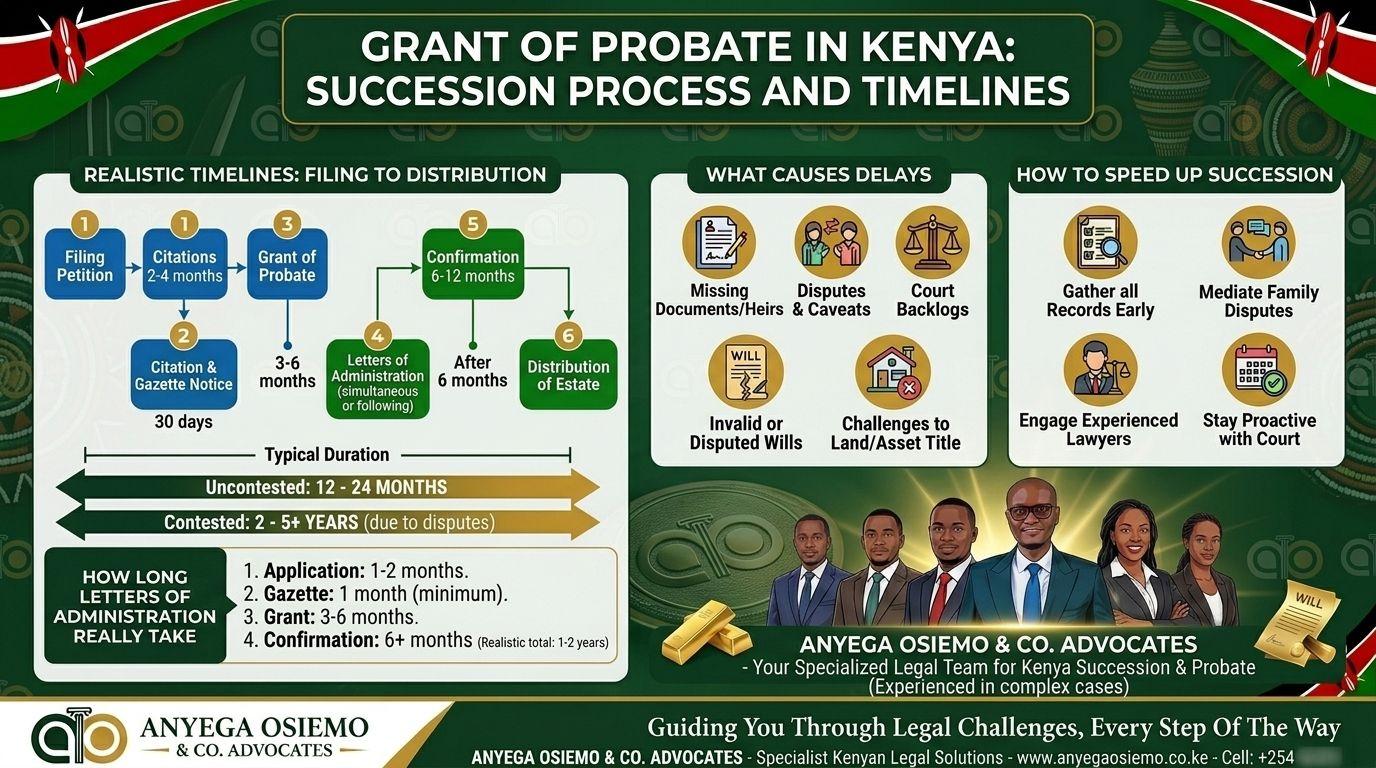
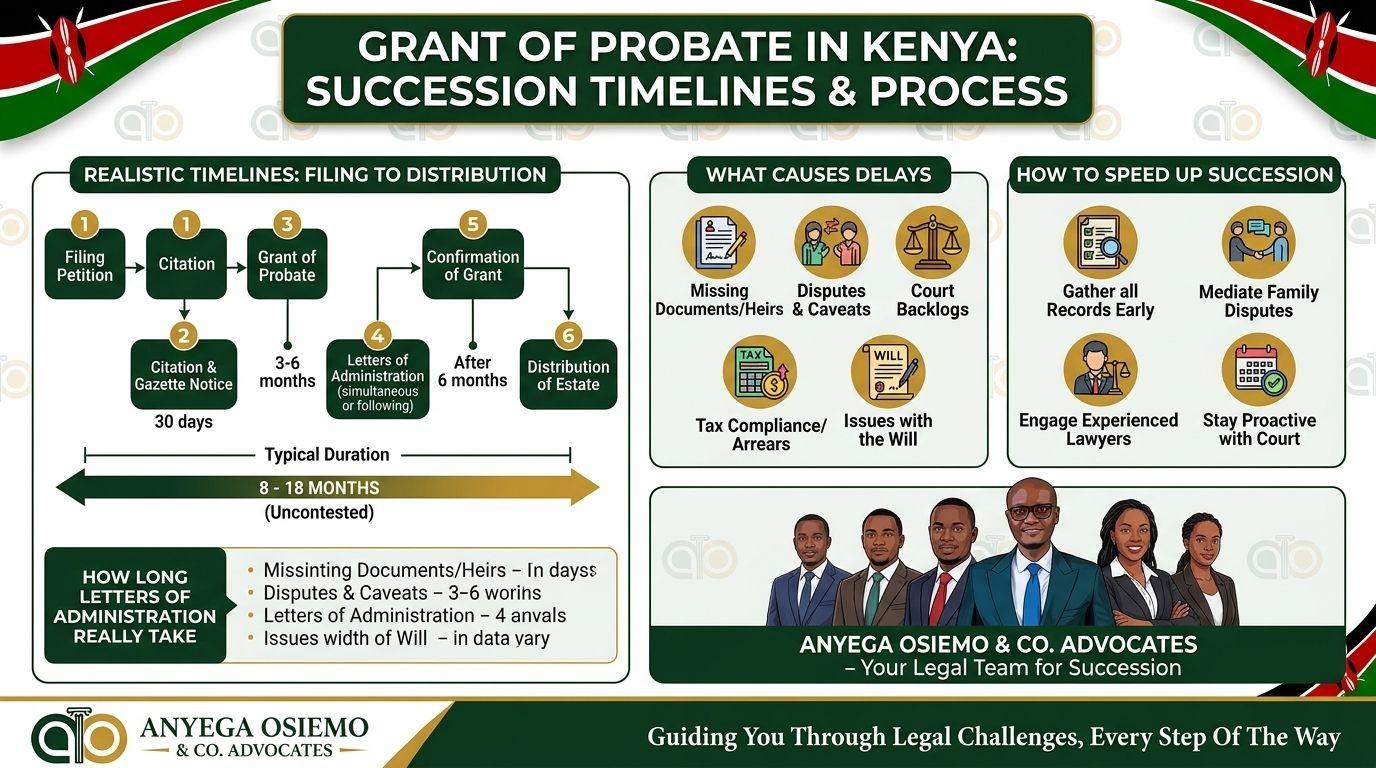
For an uncomplicated estate in Kenya, the period from filing to the issuance of a confirmed grant is typically between 6 and 12 months. Including the distribution of assets, a realistic timeframe for completion is 9 to 18 months in straightforward cases. When disputes arise, documents are missing, or there are cross-border elements, the process may take several years.
This guide outlines the probate process in five distinct stages, identifies the factors that affect the duration of each stage, and provides practical steps to avoid unnecessary delays.
A quick vocabulary note before we start
- Grant of probate issued by the High Court where the deceased left a will, confirming the executor’s authority.
- Letters of administration are issued where there is no will, appointing an administrator (usually the closest heir) with the same authority.
- Confirmation of the grant is the follow-up court step approving the actual distribution to beneficiaries. The grant alone does not let you distribute; confirmation does.
Stage 1: Document gathering (1–3 months, before any filing)
Before a petition can be filed, you must assemble:
The death certificate (and where the death occurred abroad, a foreign death certificate with apostille, plus registration in Kenya)
- The original will (if one exists); a lost or suspected-destroyed will requires its own court process
- The deceased’s national ID and copies of beneficiaries’ IDs
- Title documents for every asset: land, vehicles, shares, bank accounts
- A complete list of beneficiaries and their relationship to the deceased, with supporting documents (birth certificates, marriage certificates)
- Creditor and dependent information, where relevant
Delays at this stage are common, with most families losing at least one month, and estates involving foreign elements often experiencing even longer delays. Foreign documents must be properly apostilled, and certified copies must be authenticated by the appropriate authority. Errors such as a misspelled name on a death certificate can cause significant delays in subsequent stages. The most effective way to expedite the probate process is to begin collecting all necessary documents immediately after death.
Stage 2: Filing and the citation period (2–4 months)
The petition is filed at the High Court’s probate registry (in Nairobi, at Milimani; other major towns have their own registries). Alongside the petition, the court directs public notice of the application — typically through the Kenya Gazette and a newspaper circulating in the deceased’s area.
The citation period, which typically ranges from 30 to 90 days depending on the type of notice ordered, is a statutory requirement intended to allow any person with a potential claim, such as a dependant omitted from a will, a creditor, or a competing claimant for administration, to come forward. This period cannot be reduced. It is also the stage at which fraudulent or competing petitions may be filed. Vigilant monitoring of gazette notices and prompt response to any rival filings are essential to safeguarding both the estate and the timeline.
Stage 3: Grant issuance (2–6 months after citation)
If no objections are filed, the court issues the grant. Registry backlogs vary: Nairobi handles the highest volume of succession cases in Kenya and can be slower than smaller registries; complete, consistent files move faster than those with queries. Expect 2–6 months for this stage in a clean file.
Registry queries, which are requests for clarification or correction of documents, are the most frequent cause of delay at this stage. Each query can result in several weeks of additional processing time. Files prepared by experienced succession advocates are less likely to attract such queries, thereby reducing delays.
Stage 4: Confirmation of the grant (3–6 months)
It is important to note that the issuance of the grant does not conclude the probate process. Before any assets can be distributed or transferred, the grant must be confirmed by the court, which involves approval of the proposed distribution to each beneficiary.
Confirmation requires: an application setting out the proposed distribution; a further notice period; and, where the estate includes land, the specific parcels and shares to be registered. Where the deceased died intestate (without a will), the distribution must follow the Law of Succession Act’s formula (spouse and children first, then parents, siblings, and more remote relatives in defined shares). Where there is a will, the distribution follows the will, subject to dependants’ claims and to the validity of any bequests.
Matters involving minor beneficiaries require additional safeguards (guardianship arrangements, court protection of minors’ shares) that add both time and care. Matters with beneficiaries in the diaspora require notarised or apostilled consent documents.
Stage 5: Distribution and transfer (1–3 months)
Upon confirmation of the grant, the asset distribution process may commence. Land transfers are handled by the Lands Registry; shares are transferred through the relevant registries; bank balances are released; and the estate is wound up. While straightforward asset transfers may be completed within a few weeks, land transfers that require subdivision or involve multiple beneficiaries generally take longer.
Total: the honest summary
Scenario
Realistic timeline
Clean estate, will exists, cooperative beneficiaries
6–12 months to grant; 9–15 months end-to-end
Intestate estate, standard family structure
8–14 months end-to-end
Diaspora elements (foreign documents, remote beneficiaries)
Add 2–6 months
Any dispute, objection, or rival petition
Add 1–3+ years
What actually causes delays and the fix for each
- Disputes between beneficiaries. The filing of a formal objection can significantly extend the timeline, often resulting in a full trial. This risk can be mitigated by ensuring that wills are professionally drafted, maintaining clear, documented communication among family members, and seeking mediation at the earliest sign of disagreement.
- Missing or defective documents. Issues such as name discrepancies, absent certificates, or unregistered deaths occurring abroad can cause significant delays. To avoid such issues, all documents should be thoroughly reviewed and verified prior to filing.
- Fraudulent or parallel petitions. Competing petitions may be filed by individuals seeking to gain control of the estate. This risk can be managed by closely monitoring gazette notices and responding promptly to any such filings. Generally, the first complete and bona fide petition is given precedence.
- Estates comprising businesses, shares, or foreign assets. Each asset category requires compliance with its own registry and procedural requirements. It is advisable to identify and document all assets at the outset and to plan the sequence of administration accordingly.
- Delays in providing instructions. Estates may remain dormant for extended periods if no action is taken. Promptly instructing an advocate ensures that the statutory process commences without unnecessary delay.
- For families residing outside Kenya, all of the above considerations apply, with the additional requirements of obtaining apostilles, notarisations, and managing communication across time zones. A separate guide is available for administering probate remotely without the need for travel.
FAQs (FAQ Page schema):
Q1. What is the difference between probate and letters of administration?
A. Probate is granted where a valid will exists; letters of administration are granted where the deceased died intestate. Both are issued by the High Court and give the holder authority to administer the estate, but intestate estates must follow the Act’s distribution formula, which can add complexity at the confirmation stage.
Q2. Can the timeline be shortened if all beneficiaries agree?
A. Partially, Agreement eliminates disputes, the biggest delay factor, but the citation periods and court processes are statutory. A realistic floor for a clean estate is around 6–9 months.
Q3. What happens to the estate while probate is pending?
A. Assets are effectively frozen: no one can lawfully sell, transfer, or distribute them before a confirmed grant. This protects the estate, but it is also why early filing matters: grieving families often need access to the deceased’s accounts to cover pressing expenses, and there are lawful mechanisms to do so with proper legal guidance.
Q4. Why do some probate matters take years in Kenya?
A. Almost always one of three causes: an objection or dispute, a fraudulent competing petition, or a file stalled by document queries that nobody is actively resolving. An actively managed file rarely sits still.
Disclaimer: This article is general legal information, not legal advice. For guidance on your specific situation, book a consultation with our advocates.