A mining acquisition is the purchase of a right granted by the state, wrapped in a bundle of land relationships, regulatory obligations, contracts, and disputes —some visible, most not. The technical and financial teams will tell you whether the orebody justifies the price. Legal due diligence tells you whether you will actually own what you are paying for and what you are inheriting with it.
This is the framework we apply when advising buyers of licensed mining assets in Kenya.
1. Title and Status of the Mineral Right
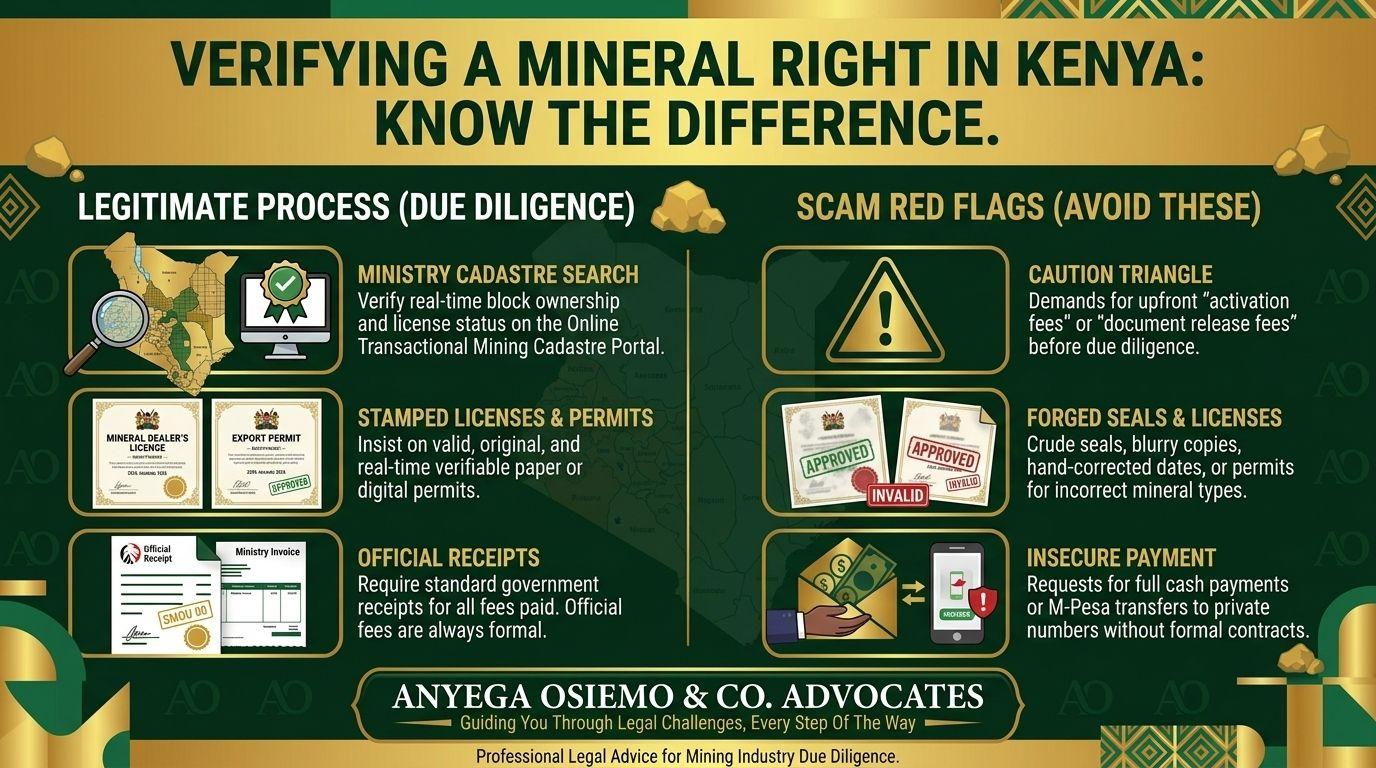
Everything starts with the cadaster. Confirm the right exists, who holds it, the area and minerals covered, the remaining term, and its current status. Then go deeper than the extract:
- Are annual rents and returns current?
- Any suspension, default, or revocation history?
- Any overlapping claims or boundary disputes?
- Does the seller actually hold what they are selling or an unregistered interest in a right recorded in someone else's name?
A right that cannot be cleanly transferred is not an acquisition; it is a lawsuit with a deposit.
2. Transferability and Structure
Not every mining asset deal transfers the right itself. Structure determines everything that follows:
- Share purchase: you buy the holding company and take the right with it together with all of the company's liabilities, known and unknown.
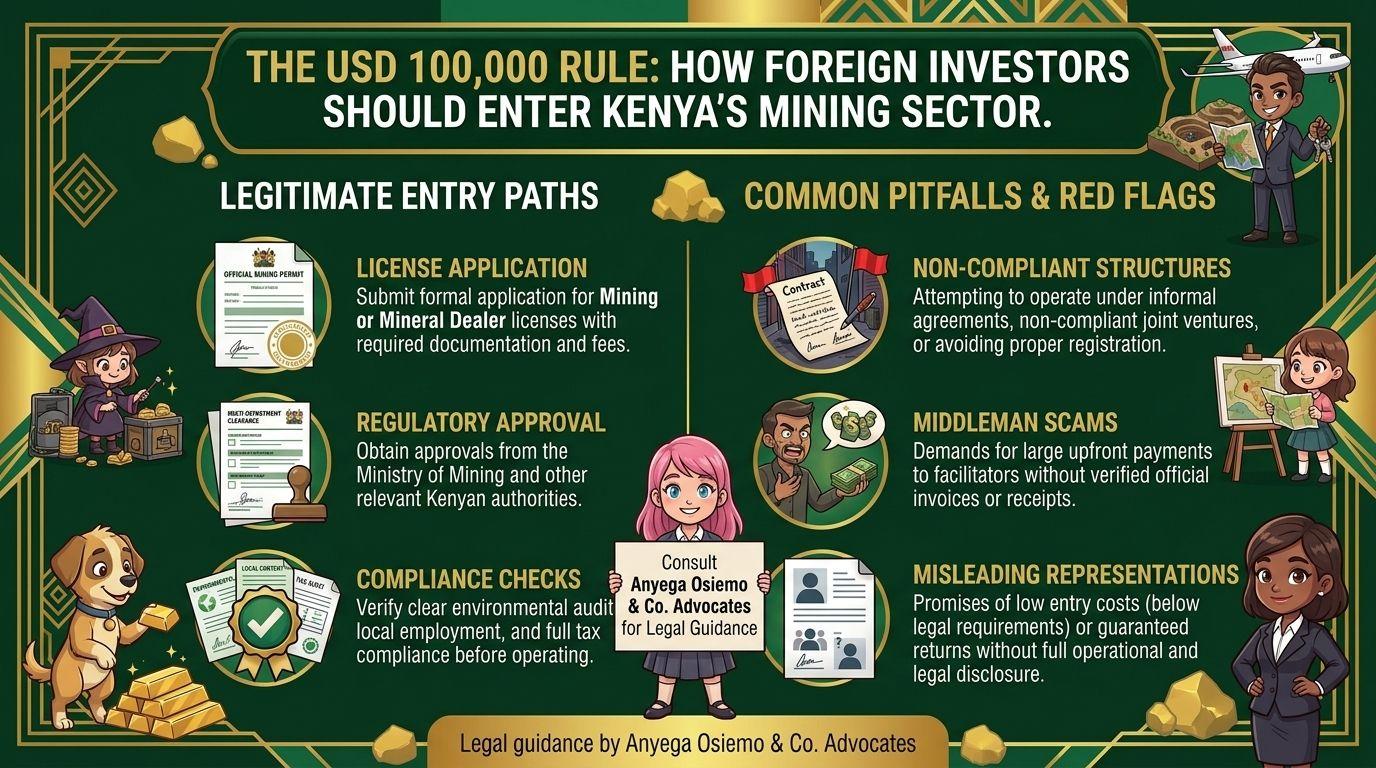
- Asset purchase: you buy the right directly, which requires a properly structured transfer, any required ministerial approvals, and registration in the cadaster to be complete.
Each route has different approval requirements, tax consequences, liability profiles, and timelines. The choice must be made before heads of terms, not discovered during drafting.
3. Regulatory Compliance File
Request and review the complete compliance record: granted licenses and permits; work programs and performance against them; returns filed; royalties accounted for; environmental obligations and their status; health and safety records; and correspondence with the Ministry and NEMA. Gaps here are not administrative trivia; they are:
- grounds for revocation of the right you are buying,
- liabilities that transfer to you as holder, and
- price adjustments or deal-breakers, if identified in time.
4. Land, Access and Consents
A mineral right is not land ownership. The holder still needs lawful access to the surface through ownership, lease, consent, or negotiated arrangements, and Kenyan law contemplates landowner and county-level consent in the licensing framework.
Due diligence must establish:
- Who owns or occupies the surface over the license area
- What written access or compensation arrangements exist and whether they are genuine, current, and honored
- Whether any community disputes, complaints, or pending claims affect the operation
- Whether the consents supporting the license were properly obtained in the first place
Operations across Kenya's gold counties have learned, expensively, that informal arrangements that "everyone understood" have a way of becoming formal disputes the day an investor with money appears.
5. Material Contracts
Review every contract the target is bound by: joint venture and farm-in agreements, offtake and supply arrangements, equipment finance, service contracts, employment obligations. Look for change of control clauses (which a share purchase may trigger), exclusivity, consent requirements, and termination rights that activate on acquisition.
6. Litigation, Disputes and Investigations
Search court records, arbitration registers, and regulatory enforcement. Map every dispute: who is fighting, over what, for how much, and what the realistic outcomes are. A KSh 50 million claim is a line item; a boundary war with a neighbor whose right was granted first is an existential problem.
7. Corporate and Financial Hygiene
For share purchases especially: who are the shareholders, are their shares clean, are there pledges or charges over the company's assets, does the company have undisclosed debt, side agreements, or related-party entanglements? Corporate due diligence on a small mining company often reveals that the company is, in substance, a single asset plus a collection of promises made at a dinner table.
8. People and Practical Control
Who actually runs the operation? Whose relationships make it work? Mining ventures at the small- to mid-scale often concentrate irreplaceable knowledge and community goodwill in one or two individuals. If they leave at closing, what exactly did you buy? Retention arrangements and non-compete protections belong in the deal documents.
Timing: When Due Diligence Happens
Sequencing is simple: verification before obligation. Binding payment commitments, non-refundable deposits, and exclusivity should never precede satisfactory legal due diligence. Deals that demand money "to prove commitment" before access to records are selling something, not a mine.
Red Flags That Deserve a Price Adjustment or a Walk-Away
- Right held in a name other than the seller's
- Lapsed renewals, rent arrears, or unfiled returns
- Surface access resting on verbal agreements
- Pending revocation or enforcement correspondence
- Litigation the seller "forgot" to mention
- Resistance to any category of document request
Sellers with clean assets do not fear due diligence.
Frequently Asked Questions
Q1. How long does legal due diligence on a Kenyan mining asset take?
A. Weeks, not days, for a focused review; longer for complex portfolios. Timelines depend on the seller's document quality and the responsiveness of registries and authorities.
Q2. Can legal due diligence be done before I make an offer?
A. A preliminary title and status review can be done quickly and cheaply before any offer. Full due diligence sits between heads of terms and the binding agreement.
Q3. What does legal due diligence cost relative to the deal?
A. A small fraction of the transaction and of the cost of the disputes it prevents. It is the cheapest insurance in mining M&A.
Disclaimer: This article is general legal information, not legal advice. For guidance on your specific situation, book a consultation with our advocates.