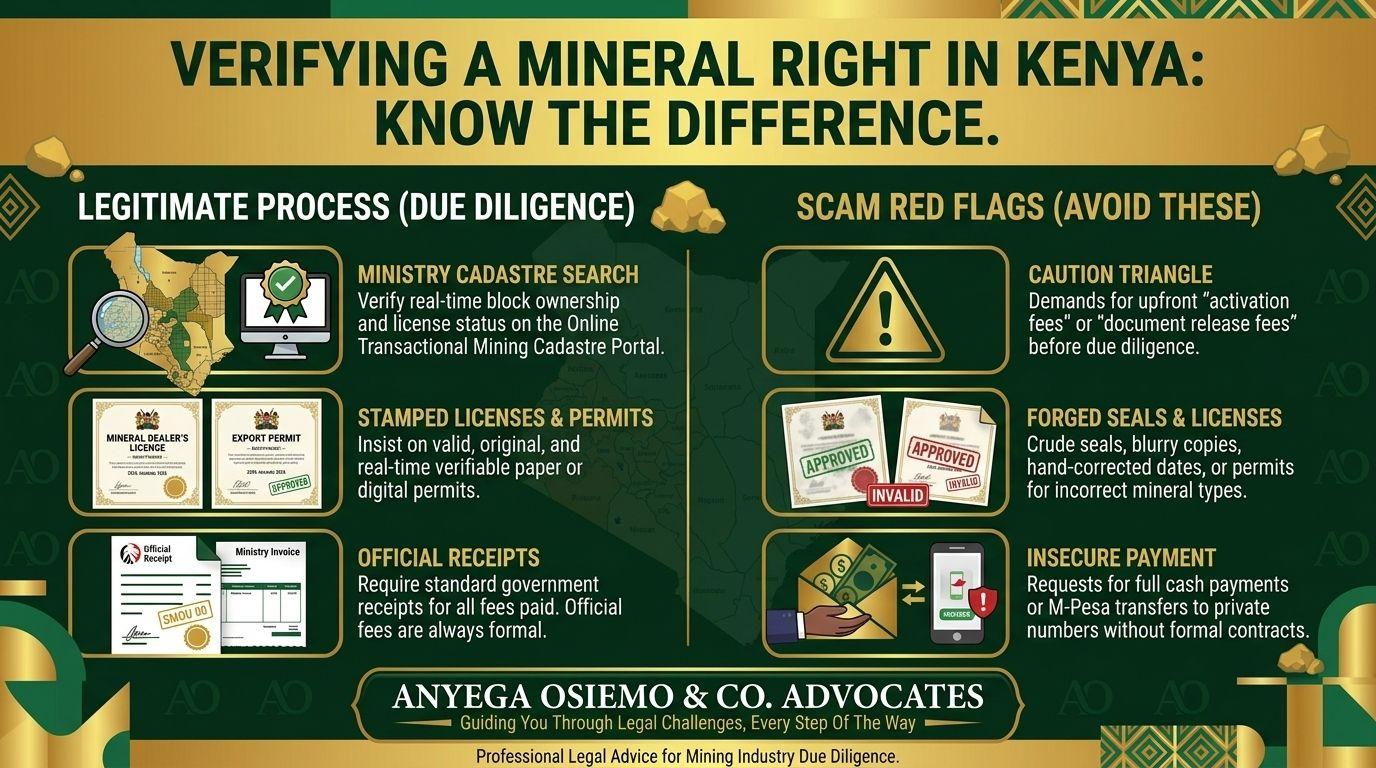
In mining transactions, the asset is not the gold in the ground; it is the mineral right that entitles someone to extract it. And unlike gold, mineral rights can be encumbered, suspended, disputed, expired, or simply nonexistent, while everyone involved acts as though everything is fine.
Whether you are acquiring a licensed asset, financing a project, or entering into a joint venture, verifying the mineral rights themselves is the foundation of due diligence. This article explains what to check and why each check matters.
What a Mineral Right Is and Why It Can Go Wrong
Under Kenya's Mining Act, 2016, mineral rights are granted by the state and registered in the official cadaster. The register records the holder, the area, the minerals covered, the term, and the status. It is the single source of truth, which is precisely why the first rule of mining due diligence is: trust the register, not the documents.
Things go wrong in predictable ways:
- Expired rights: The holder missed a renewal; the right has lapsed; the "owner" no longer owns anything.
- Suspended or revoked rights: Non-payment of rent, failure to file returns, or breach of obligations has put the right on ice, a fact conspicuously absent from the investment deck.
- Overlapping or disputed areas: Competing claims over the same ground, sometimes rooted in community or county-level disputes.
- Transfers never completed: The seller bought the right from someone, but the change of ownership was never registered, meaning the person you are paying is not the holder of record.
- Encumbrances and charges: Rights mortgaged to lenders, or subject to court orders, that follow the asset into your hands.
The Verification Sequence
1. The cadaster search
Obtain an official extract of the right from the Ministry's Mining Cadastre records. This confirms: the right exists; the holder of record; the area coordinates; the minerals covered; the grant date and term; and current status. Any discrepancy between the cadastre and the seller's documents is a stop sign, not a detail to clarify later.
2. Status and compliance
A right can exist on paper and still be compromised. Check:
- Annual rent payments: are they current?
- Required returns: production, royalty, and other statutory returns filed as required?
- Work program performance: has the holder done what the grant was based on?
- Any suspension, revocation, or default notices: these may not appear in a standard extract and must be chased directly with the Ministry.
A right with a compliance backlog is a liability wearing an asset's clothing: you would be buying the arrears, the exposure, and quite possibly a revocation process.
3. Encumbrances, litigation and disputes
Searches and inquiries should cover:
- Court records: is the right or its holder embroiled in disputes over title, boundaries, or ownership?
- Charges and securities: has the right been pledged to a lender? Registered securities follow the right.
- Community and county issues: land access disputes, consent defects, or compensation claims that do not appear in any register but will appear the moment you try to operate.
4. The transfer question
If you are buying the right rather than the company that holds it, the transaction itself must be structured and completed correctly, including any required ministry approvals and registration of the transfer in the cadaster. A signed sale agreement does not move a mineral right; registration does. Deals have collapsed, and buyers have paid for rights they never actually received because this step was treated as paperwork rather than the substance of the transaction.
Who Should Do This and When?
Verification should be completed before any payment, deposit, or "commitment fee." It is done by your own advocates, working from official records, with the results compiled into a due diligence report you can rely on.
For significant transactions, mineral right verification sits alongside, not after, corporate, financial, technical and environmental due diligence. The technical team confirms there is something worth mining; the legal team confirms that the client has the right to mine it and will still own it after payment.
The Cost of Skipping It
The failure mode is always the same: a buyer pays a premium for an asset that is encumbered, disputed, or not the seller’s to sell. By the time the defect surfaces, usually at the first attempt to transfer, operate, or raise finance, the money has moved, and the leverage is gone. Verification before payment costs a fraction of the litigation that follows.
Frequently Asked Questions
Q1. Can a mineral right in Kenya be checked online?
A. The Ministry's cadaster system holds the official register of mineral rights. Searches and extracts should be obtained through proper channels, ideally by your advocates rather than relying on documents supplied by the counterparty.
Q2. What is the difference between buying a mining company and buying its mineral right?
A. Buying the company takes the right with it along with every liability the company carries. Buying the right directly requires a properly structured transfer, any required approvals, and registration of the change in the cadaster before it is complete.
Q3. The seller says the right is "in process." Is that an asset?
A. No. An application, an expectation, or a verbal assurance from an official is not a mineral right. Only a granted, registered right has value, and only it should be priced.
Disclaimer: This article is general legal information, not legal advice. For guidance on your specific situation, book a consultation with our advocates.