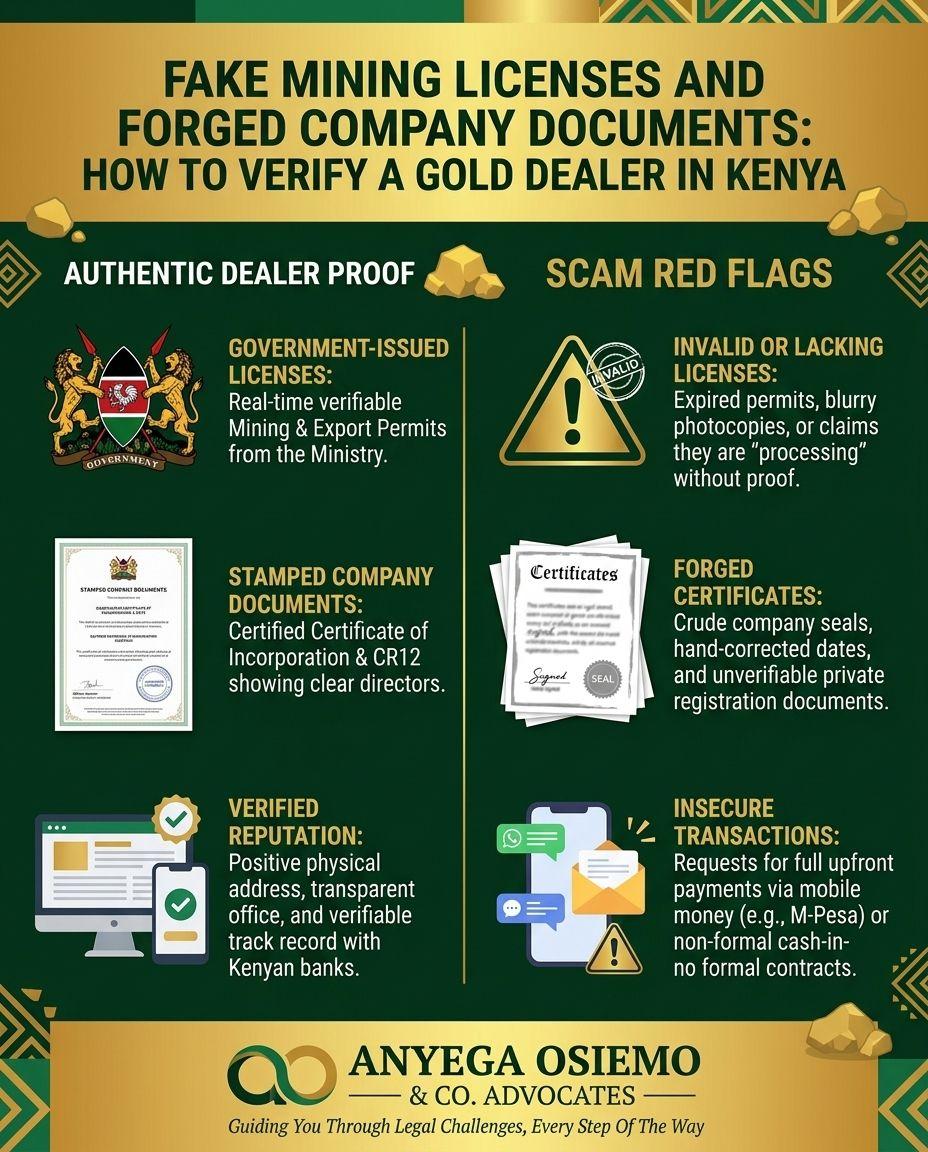
One of the first questions fraud victims ask after the disbelief fades is whether recovery is even possible. The honest answer is: sometimes, and almost always only with speed, evidence, and the right legal strategy.
A criminal complaint is important, but it is not a means of recovery. Prosecution may put the fraudsters in prison; it does not automatically return your money. That is what civil recovery is for. This article explains the main avenues available to victims of Kenya-linked gold fraud, and what determines whether they succeed.
The Recovery Toolbox
1. Civil claims against the fraudsters
A victim can sue the fraudsters in the Kenyan courts for fraud, deceit, and restitution. The claim seeks compensation equal to the losses from the payments made, plus in some cases consequential losses. The strength of these claims is usually straightforward: the evidence of payment and misrepresentation is typically overwhelming. The challenge is not winning; it is collecting.
2. Asset tracing
Recovery depends on locating assets: bank accounts, vehicles, property, business interests. This is where the victim's own evidence becomes gold. Bank transfer records identify the receiving accounts. Those accounts lead to the account holders, often the fraudsters themselves or their fronts. Kenyan advocates can pursue disclosure through the courts, and in some cases, banks can be compelled to reveal account details.
The money trail is time-sensitive. Fraudsters move funds quickly between accounts, into cash, into assets held in other names. Every week of delay shrinks what can be traced.
3. Freezing orders (Mareva-type injunctions)
Where traceable assets are identified, a victim can apply to court for a freezing order, an injunction restraining the fraudsters from dealing with or dissipating specified assets pending the claim. Properly timed, a freezing order can freeze bank accounts before the money moves. This is one of the most powerful tools in fraud litigation, and one of the most time-critical: it only works if the assets are still there.
4. Claims against third parties
In some cases, liability extends beyond the direct fraudsters: people who knowingly assisted, companies used as conduits, or recipients of the stolen funds who cannot explain their entitlement. Kenyan law provides remedies against those who receive proceeds of fraud knowing of the fraud; another reason the bank trail matters so much.
5. Bank chargeback and payment-channel remedies
Depending on how payment was made wire transfer, card, or other channels there may be remedies through the payment system itself. These are typically fast-moving and time-limited. If you paid recently, raise this with your bank immediately and take legal advice in parallel.
What Determines Whether Recovery Succeeds
Four factors dominate:
Speed: The single biggest variable. Funds frozen or traced within days of the fraud survive; funds left for months are usually gone.
Evidence: Complete records: contracts, messages, receipts, transfer confirmations, names, and identifiers make tracing and proving the claim dramatically easier. Victims who confront the fraudsters before preserving evidence often destroy their own case.
Whether the fraudsters hold real assets: Sophisticated networks launder proceeds into property, vehicles, and businesses; some lead relatively visible lives. Others are professional ghosts. Asset tracing answers this question early and shapes strategy.
Acting before the fraudsters know you are acting: Surprising the target with a freezing application is what makes it work. A victim who telegraphs their intentions, demanding refunds, threatening lawyers, gives the fraudsters time to empty the accounts.
Realistic Expectations
Victims deserve honesty: not every case is recoverable. If the money has been moved offshore, dissipated, or was never in Kenya at all, recovery prospects narrow sharply. Sometimes the best achievable outcome is a criminal conviction that prevents the network from defrauding others, which is worth something.
But in a meaningful share of cases, particularly when victims act within days, funds remain traceable and can be frozen. The documented pattern of these scams receiving accounts held in the fraudsters' own names, visible spending on property and vehicles, and networks that stay in Kenya means the window for effective action is real, if you move through it.
The Practical Sequence
If you are a victim: the order of operations matters:
1. Stop all payments: to the fraudsters immediately.
2. Preserve all evidence: do not alert the fraudsters.
3. Instruct a Kenyan advocate: the same week, not the same month.
4. Report to the DCI/police: criminal and civil tracks should run together.
5. Pursue tracing and freezing applications while the money trail is fresh.
6. Notify your own bank if the payments were recent.
Frequently Asked Questions
Q1. Can I sue a gold scammer in Kenya from abroad?
Yes. Foreign victims can instruct Kenyan advocates and pursue claims without being physically present for most of the process. Power of attorney and proper engagement of local counsel make this routine.
Q2. Will the police get my money back?
Criminal prosecution and asset recovery can overlap; courts can order restitution in criminal proceedings, but you should not rely on the criminal process alone. Civil action gives you control over the recovery strategy.
Q3. How long does recovery take?
Freezing orders can be obtained within days where the evidence supports urgency. Full recovery litigation typically takes many months to years depending on complexity and whether the fraudsters defend.
Q4. What does it cost?
Costs depend on the case, but many victims find that acting early through targeted applications (tracing, freezing) is far more economical than they expect and infinitely cheaper than the loss of doing nothing. Fee arrangements can be discussed at consultation.
Disclaimer: This article is general legal information, not legal advice. For guidance on your specific situation, book a consultation with our advocates.