Two buyers can pay the same price for the same mine and end up owning entirely different things. The difference is not the asset; it is the structure. In Kenyan mining acquisitions, the choice between buying shares in the holding company and buying the mineral right directly is the single most consequential legal decision in the deal.
This article explains what each route delivers, when each makes sense, and the traps that catch buyers who choose a structure by habit rather than analysis.
The Two Routes, Precisely
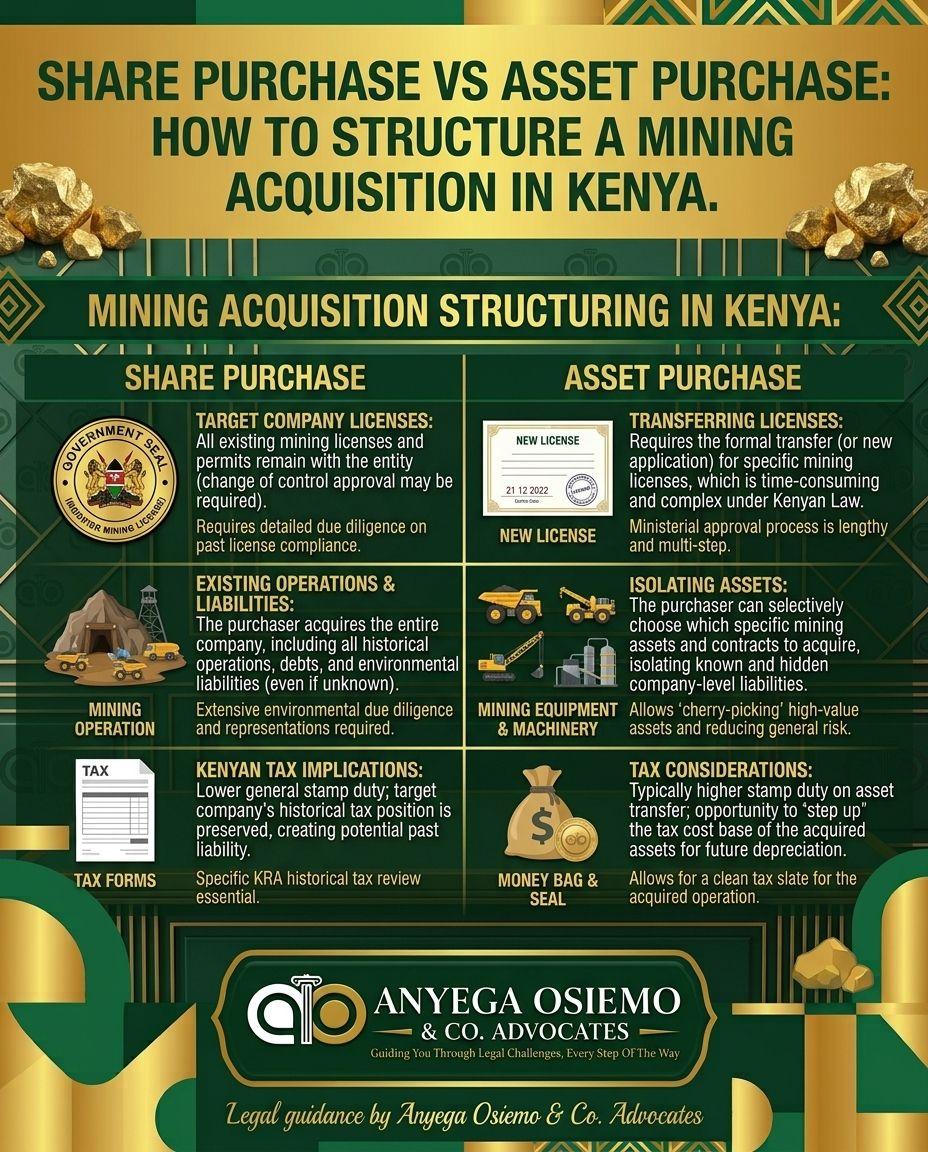
Share purchase: You acquire shares in the company that holds the mineral rights. The right never moves; the same company continues to hold it, now under your ownership. The mine, the licenses, the contracts, the employees, the bank accounts, and the liabilities all remain exactly where they were.
Asset purchase: You acquire the mineral right itself (and selected other assets), typically into a company you control. The right must be formally transferred and structured correctly, any required approvals obtained, and the transfer registered in the cadaster before it is complete; what you do not buy stays with the seller.
What Actually Differs
Liability
The share purchase inherits everything: the disclosed liabilities, the undisclosed ones, the tax exposure, the environmental arrears, the forgotten dispute. In law, the company is the bundle you bought; the bundle.
The asset purchase lets you leave liabilities behind, subject to two realities: some obligations attach to the right itself (statutory compliance burdens follow the holder), and creditors have remedies in some circumstances where assets are moved out of their reach.
Approvals and mechanics
A share purchase changes the shareholders, not the holder of the mineral right, so in many cases, no approval for the transfer of the mineral right is needed. But watch for change-of-control sensitivity elsewhere: some contracts, permits, and financing arrangements treat an ownership change as a trigger that requires consent.
An asset purchase requires the transfer to be structured to satisfy the Mining Act's requirements, ministerial involvement where required, and registration of the new holder in the cadastre. Until registration, you have a contract right to a mineral right, not the right itself.
Tax
The routes are taxed differently for the seller and, through price, for the buyer. Capital gains treatment, VAT on the transfer of assets, stamp duty, and the allocation of the purchase price across assets all differ by structure. The "cheaper" route at the table can be the dearer one at the revenue authority, which is why tax advice belongs beside legal structuring, not after it.
What the seller wants
Sellers often prefer share sales: cleaner exit, single layer of tax, no need to extract the asset. Buyers often prefer asset purchases: cherry-pick the good, leave the bad. The negotiation is real, and structure is a term which means it is negotiated with the price, not dictated by either side's lawyer.
The Kenyan Mining-Specific Considerations
Beyond general M&A doctrine, mining deals in Kenya carry structural issues of their own:
The right's condition follows the route. In a share purchase, the company's compliance history, rent, returns, and work programs automatically become yours. In an asset purchase, you still inherit the right's statutory obligations going forward, but a compliance backlog is the seller's problem to cure before closing.
Surface and community arrangements must be re-papered in an asset deal: Access agreements, consent arrangements and compensation commitments were signed with the seller's company. They do not automatically bind your vehicle. This is frequently underestimated and surfaces at the first attempt to move equipment onto site.
Financing follows this structure: lenders taking security over mineral rights and associated assets have preferences; some facilities are easier to put in place over a clean new hold than over an inherited one with a history. If finance is part of your plan, structure with the lender's requirements in mind from day one.
A Practical Decision Framework
Lean toward a share purchase when: the target is clean (strong compliance file, no legacy disputes), the value sits in the whole operating entity (team, contracts, permits, track record), speed matters, and the seller's price reflects what you inherit.
Lean toward an asset purchase when: the target carries baggage you refuse to inherit, you are buying a dormant right rather than an operating business, you want the asset inside your own corporate structure from the start, or lender requirements point that way.
In every case: the decision follows due diligence. Structure chosen before the skeletons are counted is structure chosen blind.
The Drafting Consequences
Whatever the route, the documents must do the work:
- Warranties and indemnities that allocate identified and unidentified risks and survive closing
- Conditions precedent that keep the deal from closing before approvals, consents, and registrations are in hand
- Price mechanisms (holdbacks, escrows, earn-outs) that keep the seller invested in the truth of their disclosures
- For asset deals, transfer and registration mechanics treated as closing deliverables, not post-closing housekeeping
Frequently Asked Questions
Q1. Which is faster: share or asset purchase in Kenya?
Share purchases usually close more quickly, since the mineral right does not transfer. Asset purchases include transfer approvals and cadastral registration in the critical path.
Q2. Can I change structure mid-negotiation?
Yes, but not cheaply. Structure affects drafting, tax, approvals, and price. Changing it late typically costs more than choosing correctly early.
Q3. Do I need Ministry approval for either route?
Share purchases generally do not involve a mineral rights transfer, but regulatory and contractual consents still require review. Asset transfers of mineral rights engage the Mining Act's transfer framework and require proper registration. Specific advice on the current requirements is essential for your transaction.
Disclaimer: This article is general legal information, not legal advice. For guidance on your specific situation, book a consultation with our advocates.