Every week, businesspeople board flights to Nairobi convinced they are about to close a gold deal that will make them a fortune. Some are right. Many are walking, with luggage full of documents they never verified, into one of the most sophisticated fraud environments in Africa.
The tragedy of the Kenya-linked gold scam is that most of it is preventable — the checks that would have exposed the fraud are neither exotic nor expensive. This checklist covers what you should verify before you travel, so that if you board that flight, you board it with your eyes open.
Before You Book Anything
1. Ask why the deal exists: Legitimate gold sells at or above market price, to buyers the seller has verified. If a stranger is offering you gold at a discount, on the internet, the question is not "is this real? but why would a real seller do this?" There is no good answer.
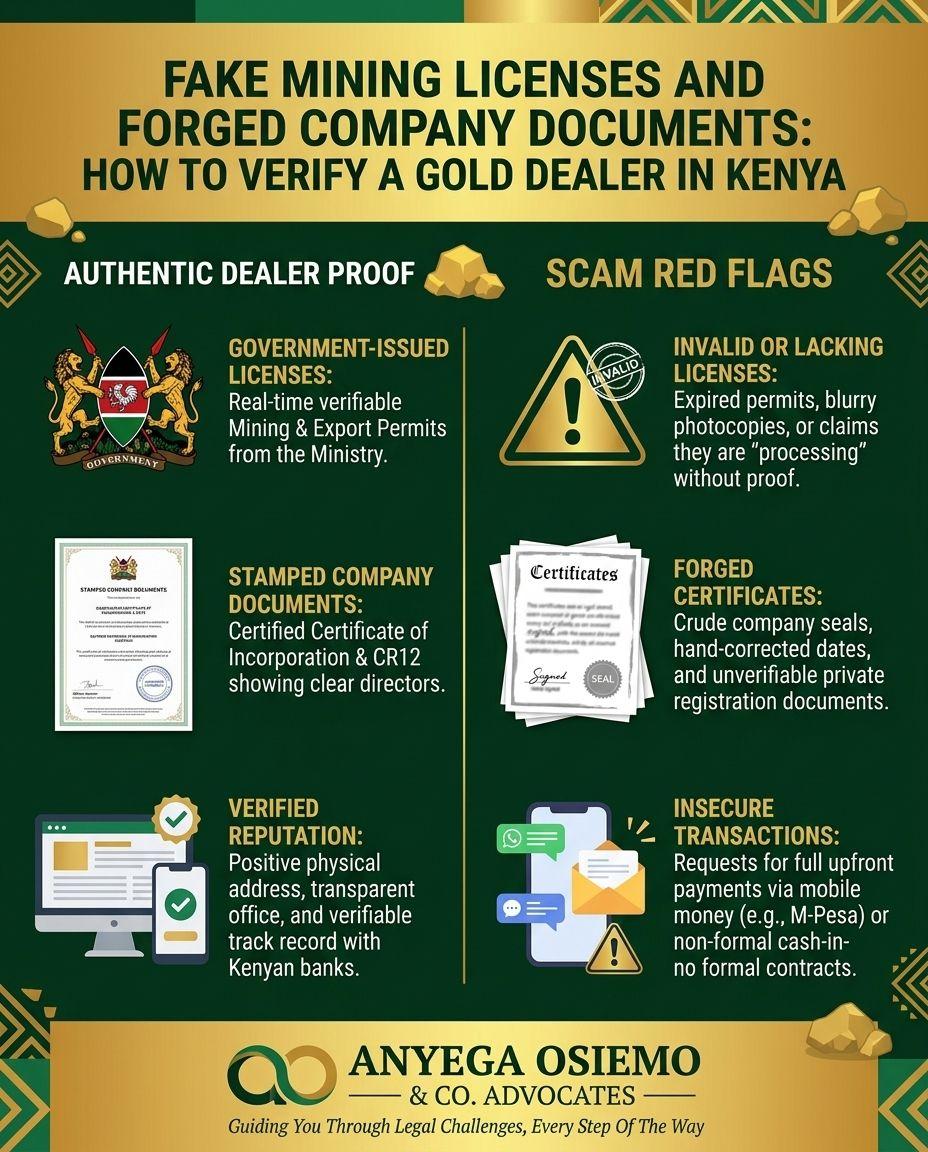
2. Check the company on eCitizen: Kenya's Business Registration Service allows verification of company registrations. Confirm that the company exists, is active, and, critically, that its registered directors are the people you are dealing with. A company registered last month with a postal-box address is not a mining conglomerate.
3. Verify any claimed mineral or dealer license: If the seller claims to be a licensed mineral dealer or to hold mining rights, verify the license through the Ministry responsible for mining's official channels. License numbers can be checked; names can be matched. A seller whose claimed license does not appear in official records is not licensed, regardless of what their documents say.
4. Insist on independent assay before payment: A genuine seller has no objection to their gold being tested at a laboratory the buyer chooses. Scammers resist independent assay, offer their own "certificates," or propose laboratories they control. This single requirement filters out most fraud.
5. Engage your own Kenyan lawyer, not the seller's: The scammer's "lawyer," introduced by the scammer, is part of the cast. You need independent counsel: someone who verifies the seller's status, reviews the contract, and structures payment protection. If the seller objects to your lawyer's involvement, walk away.
Structuring the Deal So You Cannot Lose
If the verification checks out and the deal is genuine, structure it so that fraud becomes structurally impossible:
Escrow: Payment is held by an independent law firm or bank and is released only upon verified delivery and independent assay. Never pay "fees," "deposits," or "mobilization costs" outside escrow.
- Delivery against payment: Not before, not after, but simultaneously, through the escrow mechanism.
Independent inspection at delivery: Your representative (or an inspection company you appoint) verifies quantity and takes samples before release.
Documentation through official channels only: Any permit, tax, or customs cost is paid directly to the relevant authority against official receipts, never to the seller or their intermediaries.
Red Flags That Should Cancel the Trip
Cancel the trip immediately, without negotiation, if any of these appear:
- The seller discourages or resists your own legal representation
- You are asked for any payment before inspection and assay
- "Government connections" or "ministerial approvals" feature in the pitch
- The price is materially below market
- The seller controls every element: their laboratory, their lawyer, their logistics, their escrow
- You were cold-contacted on LinkedIn, WhatsApp, or email
- The story involves urgent deadlines, a buyer who "fell through," or gold that must move this week
- The seller cannot produce licenses that verify through official channels
One red flag might be explained. Three of them are a script.
If You Are Already in Nairobi and Something Feels Wrong
Victims sometimes sense the truth mid-visit — the office is rented for the day, the "director" avoids questions, the paperwork doesn't quite add up. If this is you:
- Do not pay anything further. Not one fee. Not as a "test."
- Do not confront the sellers aggressively: preserve your safety and your evidence.
- Preserve everything: documents, photos of people and offices, phone numbers, vehicle plates, receipts.
- Contact your own lawyer and, if a crime has occurred, the police.
- If you have already transferred money: treat time as critical; recovery options narrow every day.
The Bottom Line
Nairobi is home to real gold businesses and real mining interests and to organized fraud networks that have perfected the art of looking like them. The difference between the two is verifiable, and verification happens before the flight, not at the warehouse.
A few hundred dollars of legal due diligence before you travel is the cheapest insurance any gold buyer will ever purchase.
Frequently Asked Questions
Q1. Is it safe to buy gold in Nairobi in person?
In-person inspection eliminates some fraud but enables others: staged offices, switched samples, and travel-linked pressure. Safety comes from independent verification and escrow structure, not from being physically present.
Q2. Can a lawyer in Kenya verify a gold seller for me?
Yes, checking company registration, licensing status, litigation history, and documentation is standard due diligence work. This is exactly what the seller's "lawyer" in the scam pretends to do.
Q3 What paperwork is required for a legitimate gold export from Kenya?
Legitimate exports require proper documentation, including a mineral export permit, obtained through official Ministry processes. Your lawyer can confirm the current requirements for your specific transaction; any seller who cannot explain this clearly is telling you something.
Disclaimer: This article is general legal information, not legal advice. For guidance on your specific situation, book a consultation with our advocates.