Every gold scam needs one thing above all: something that makes the victim believe the gold is real. Since the gold usually isn't, the belief has to be manufactured. In Kenya-linked scams, the manufacturer's tool of choice is the forged assay certificate.
An assay certificate is a laboratory report stating the purity and composition of a metal sample in a gold transaction; it is the document that tells the buyer what they are actually buying. Scammers understand this perfectly, which is why so much effort goes into producing convincing ones.
How the Forgery Works
The methods range from crude to sophisticated:
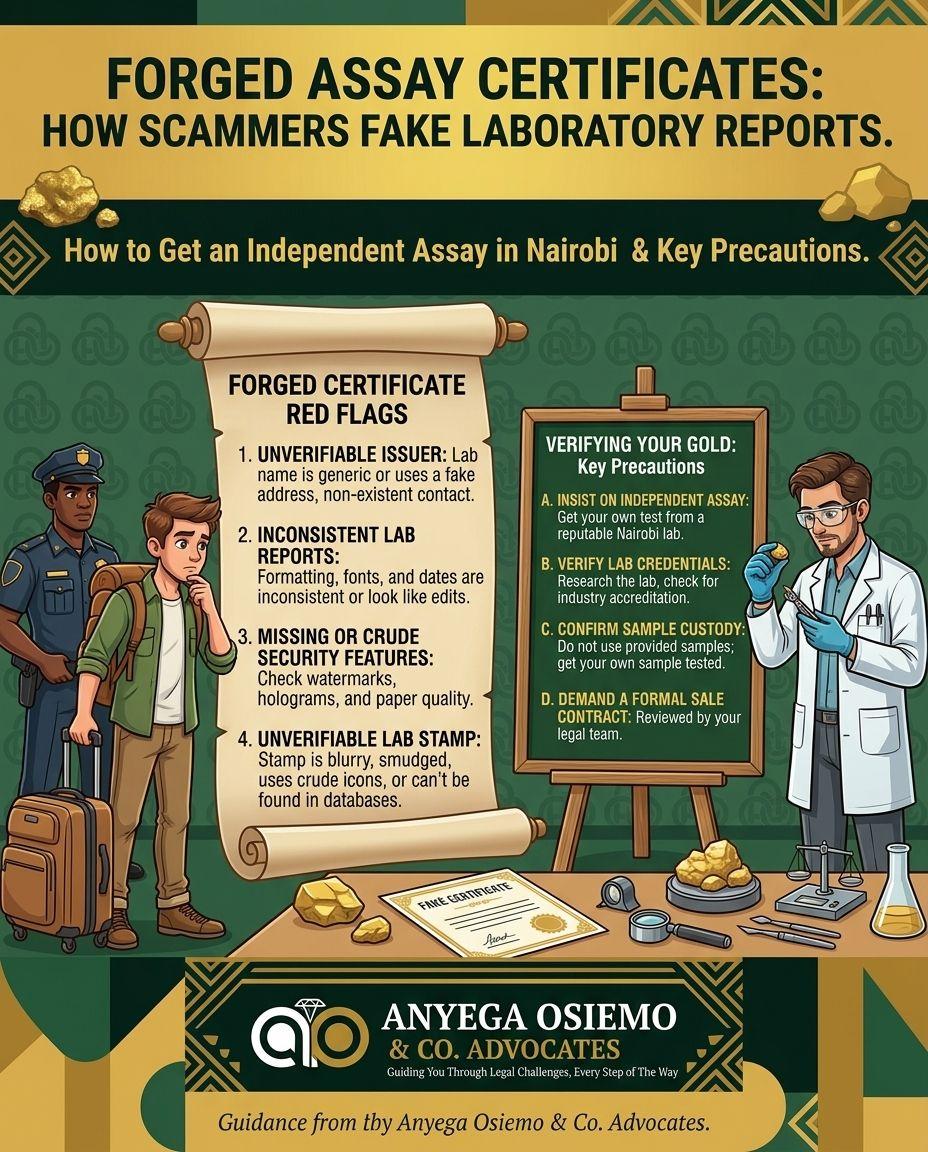
The template copies. Real certificates from genuine laboratories are photographed or obtained, then edited, names changed, serial numbers altered, and dates updated. To a buyer who has never seen the laboratory's actual report format, the result is indistinguishable.
The borrowed identity: Some forgeries use the name and branding of a real, respected Kenyan or international laboratory. The certificate looks authoritative; that lab never issued it.
The complicit "laboratory": In some operations, the fraudsters control the testing themselves, in a rented office with a scale, an XRF gun, and a printed letterhead. The "assay" shows 99.9% purity because it is performed on a real gold sample, a plated bar, or an invented one.
The genuine certificate, wrong metal. The most elegant trick: a real assay certificate for a real sample, but the bars delivered are not the bars tested. The certificate is authentic; the gold is not.
Why Certificates Alone Can Never Be Trusted
The common thread across all methods is that the certificate only matters if you control the sample's chain of custody. A certificate is a claim about a specific sample tested at a specific time by a specific laboratory. If the seller chose the sample, chose the laboratory, and carried the sample there themselves, the certificate tells you nothing about what you will actually receive.
This is why every fraud victim's file contains impressive-looking assay documentation and why none of it saved them.
How to Get an Independent Assay in Kenya
The fix is straightforward and non-negotiable: the buyer controls the verification.
1. Choose the laboratory yourself: Select an accredited, established assay laboratory in Nairobi that you identify independently, not one recommended by the seller. If you are abroad, your Kenyan lawyer can identify and engage the laboratory on your behalf.
2. Control the sample: Sampling must be done by someone acting for you, your representative, or an independent inspection professional drawn randomly from the actual bars or material being purchased, in the seller's presence, with the samples sealed and documented on the spot.
3. Chain of custody: Sealed samples travel directly to the laboratory, documented at every handover. Any break in the chain invalidates the result.
4. The right tests: Surface tests can be fooled by plating and tungsten cores. Proper methods include fire assay (the gold standard for purity), XRF screening, and density testing, with fire assay for any significant transaction.
5. Payment conditional on results: The transaction structure should release funds only after the independent assay confirms what was agreed. This is where escrow matters: the money is already committed, but moves only on verified quality.
The Cost-Benefit That Makes This a Non-Decision
A professional independent assay costs a tiny fraction of any real gold transaction, typically a modest fixed fee or a small percentage of value. Set against transactions of USD 50,000, USD 500,000, or USD 5 million, it is the cheapest line item in the deal by orders of magnitude.
No legitimate seller objects to independent assay. Objection to it any version of "our certificates are sufficient, we don't allow external labs, there’s no time” is not a negotiating position. It is a confession.
If the Assay Comes Back Wrong
If independent testing shows the material is not as represented gold-plated base metal, a copper-zinc-tin mixture, plated tungsten you are almost certainly dealing with a criminal network, not a mistaken seller:
- Do not alert them beyond what is necessary to secure your position
- Preserve the samples, the certificates they provided, and all communications
- Report to the police/DCI
- Take legal advice immediately; you may have grounds for recovery, and the sooner the money trail is pursued, the better
Frequently Asked Questions
Q1. Can I verify an assay certificate with the laboratory that supposedly issued it?
Yes, genuine laboratories can confirm whether a report bearing their name was actually issued, and can verify serial numbers. This check, done using contact details you source independently, exposes identity-forgery attempts immediately.
Q2. Is XRF testing enough to verify gold bars?
XRF is a useful screen but can be defeated by plating and core substitutions. For consequential transactions, fire assay of properly drawn samples is the reliable standard.
Q3. Do I need to be in Kenya to arrange independent testing?
No. Your Kenyan lawyer or an appointed inspection company can manage sampling, sealing, and laboratory submission on your behalf, reporting results directly to you.
Disclaimer: This article is general legal information, not legal advice. For guidance on your specific situation, book a consultation with our advocates.