Policy documents are easy to dismiss as bureaucratic wallpaper. Kenya's 2026 Minerals, Mining and Beneficiation Policy is not one of those. Issued under the Ministry responsible for mining, it sketches the most ambitious restructuring of the country's mining sector since the 2016 Act, and for anyone holding, applying for, or disputing a mineral right, it is a preview of the legal environment you will operate in for the next decade.
This article explains the major proposals, what each would change in practice, and why now, before the proposals harden into legislation, is the moment to engage.
What the Policy Proposes
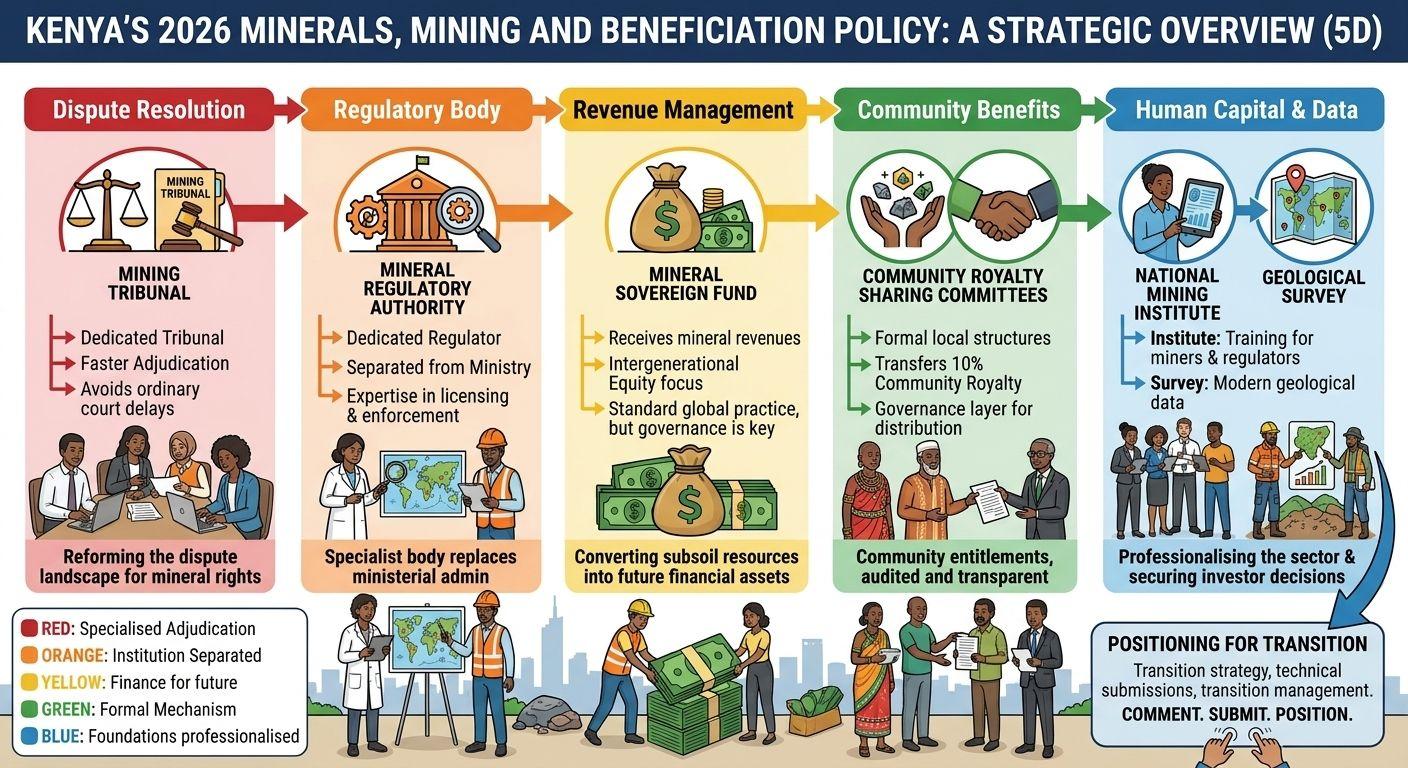
- A Mining Tribunal. The policy proposes a dedicated tribunal to resolve mining disputes. If realised, this changes the dispute landscape fundamentally: specialised, faster adjudication replacing or at least pre-empting the ordinary courts for mining-specific disputes. For an industry where disputes age into worthlessness in the court queues, a functioning tribunal would be transformative.
- A Mineral Regulatory Authority. A dedicated regulator for the sector, separating regulatory function from ministerial administration. The significance is institutional: licensing, inspection, and enforcement under a specialist body rather than a generalist ministry department.
- A Mineral Sovereign Fund. A fund to receive and manage mineral revenues, explicitly aimed at promoting intergenerational equity. Resource funds of this kind designed to convert depleting subsoil assets into financial assets for future generations are standard practice in mature mining jurisdictions; their effectiveness depends almost entirely on governance.
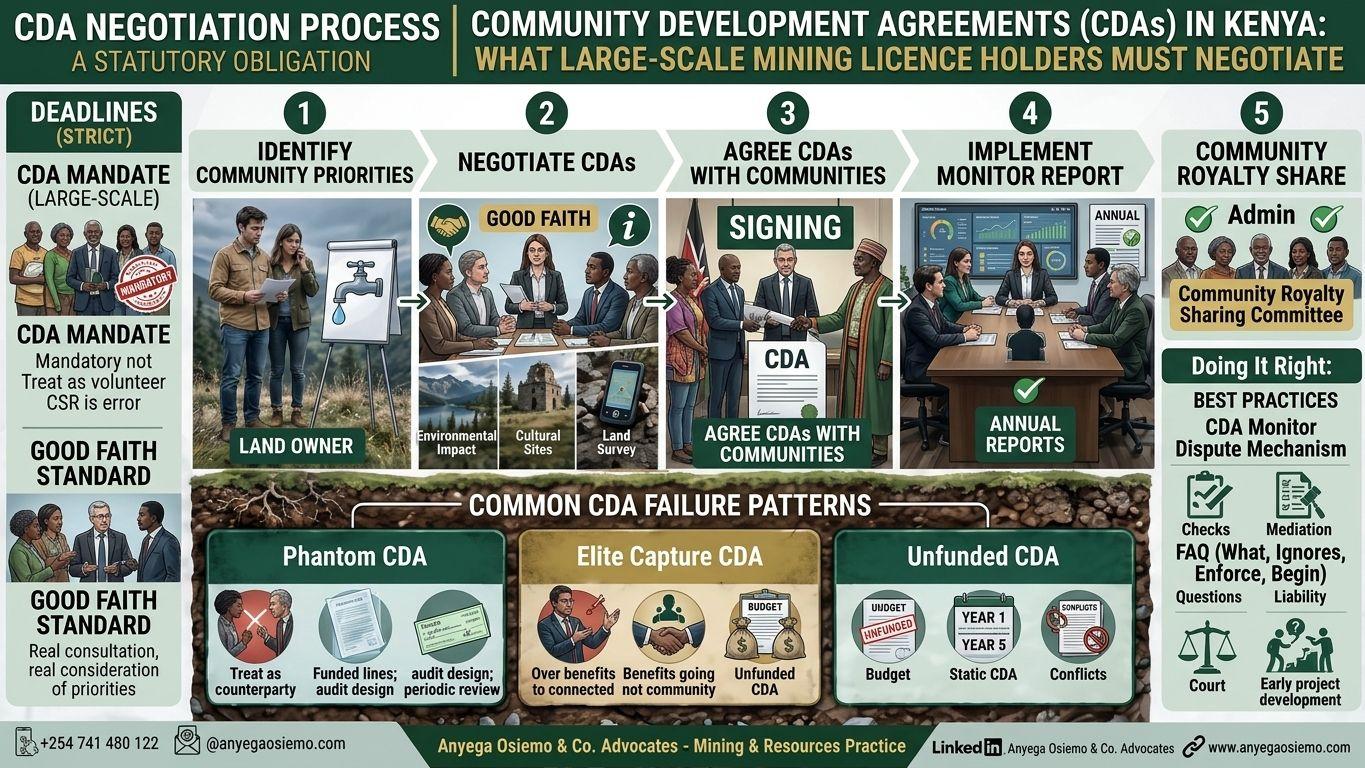
- Community Royalty Sharing Committees. Formal local structures to administer community shares of mineral revenues. Combined with the 10% community royalty under the 2026 sharing regulations, this would give communities both a larger entitlement and a formal mechanism for receiving it the governance layer the current framework lacks.
- A National Mining Institute. Professionalising the sector's human capital training for miners, technicians, and the regulators themselves.
- A revitalised Geological Survey. Modernising the state's geological data function the foundation on which every exploration decision, and every investor's risk assessment, ultimately rests.
Why Policy Matters Before Law
A policy is a direction of travel, not a binding rule. But policies are where laws are born: the proposals here will return as bills, regulations, and institutional reorganisations. The stakeholders who engage at policy stage commenting, submitting, positioning shape the law; those who wait for the bill meet it as a fait accompli.
Three engagement opportunities are live now:
1. Public participation processes. Policy implementation and the legislation it spawns will pass through formal consultation. Organised, technical submissions matter.
2. Institutional design debates. How the Tribunal is composed, how the Sovereign Fund is governed, how Community Committees are constituted these details determine whether the institutions work or fail, and they are being discussed now.
3. Positioning for transition. Holders, investors, and their advisers should model their compliance and dispute strategies under the proposed architecture, so that transition, whenever it arrives, is managed rather than suffered.
What Each Proposal Means in Practice
- The Tribunal could shorten dispute resolution from years to months, changing the calculus on whether to litigate, settle, or arbitrate. Its jurisdiction, composition, and appeal route will be contested details worth watching.
- The Authority could professionalise licensing and enforcement or add another layer of process. The difference lies in design.
- The Sovereign Fund is where mineral wealth becomes national wealth or becomes a brief stop for money heading elsewhere. Kenya's experience with similar funds elsewhere on the continent is instructive: the law that creates the fund matters less than the governance that runs it.
- The Community Committees will channel real money 10% royalties on production through local structures. Communities, counties, and operators all have an interest in getting their design right: transparent, audited, representative.
Frequently Asked Questions
Q1. Is the policy already law?
A. No. A national policy is a statement of government direction; binding obligations arise from Acts and regulations. But the proposals signal what legislation will follow.
Q2. When will these institutions exist?
A. Timelines depend on the legislative programme; some proposals require new statutes, others regulatory action. Stakeholders should track the conversion of policy into bills.
Q3. Does the policy affect existing licences?
A. Not directly; existing rights are governed by the Mining Act and their grant terms. Indirectly, everything: the dispute forum, the regulator, the revenue framework all condition the environment in which existing rights operate.
Q4. How can stakeholders influence the outcome?
A. Through public participation in the legislative and regulatory processes that implement the policy submissions to Parliament, engagement with the Ministry, and participation in consultation forums. Organised, technical input has the most weight.
Disclaimer: This article is general legal information, not legal advice. For guidance on your specific situation, book a consultation with our advocates.