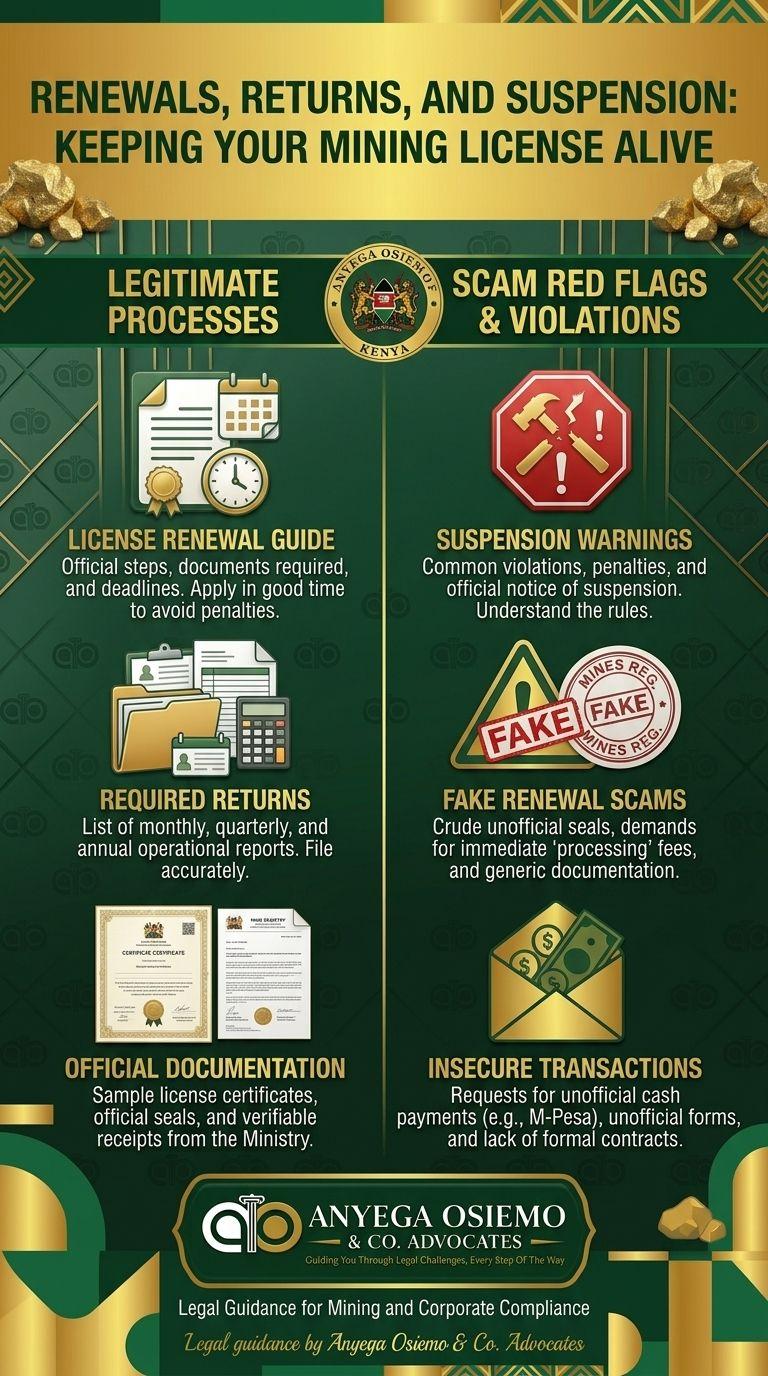
In Kenyan mining, the license is not won at grant; it is kept, year by year, through a discipline of obligations that most holders discover too late. Rights lapse, are suspended, or are revoked not because the Ministry is hostile, but because holders fail to do the quiet, recurring things the law demands.
This is the maintenance manual most license holders never read: what the ongoing obligations are, how rights actually die, and how to make sure yours does not.
The Ongoing Obligations, Plainly
Holding a mineral right in Kenya carries continuing duties across four categories:
1. Money. Annual rent on the right, payable when it falls due. Royalties on production. Miss these, and the file at the Ministry develops a mark against your name and eventually, a case against your right.
2. Paper. Statutory returns, production returns, royalty-related filings, and such other reports as the framework requires are filed on time, every time. These are not optional reporting; they are the conditions on which the right was granted.
3. Work. The work program your application promised must actually happen and be demonstrable. A right granted on a development plan that exists only on paper is a right on borrowed time.
4. Environment. Approved environmental commitments, management plans, mitigation measures, and rehabilitation obligations are continuing conditions, monitored long after the EIA is a memory.
Individually, each obligation is modest. Collectively, they are the difference between an asset and a historical document.
How Rights Actually Die: The Four Exits
Expiry. Rights have terms. Renewal applications must be made in time; a right that lapses for non-renewal is gone, and its ground returns to the pool for others to claim. Reviving a lapsed right is far harder than renewing on time; in practice, it often means starting over.
Suspension. The Ministry can suspend a right for breach, commonly rent arrears, unfiled returns, or unmet work obligations. Suspension is a warning state: the right still exists, but the holder cannot lawfully operate. Used properly, it is a prompt to cure. Ignored, it becomes the next exit.
Revocation. For continued or serious breach, the right is canceled. The holder loses the asset entirely; the ground is open to others. Revocation proceedings are exactly as unpleasant as they sound, and they rarely come as a surprise; they follow suspension notices that were ignored.
Surrender. Sometimes holders deliberately walk away, abandoning the right to stop the rent clock. Done properly, through formal surrender, this is clean. Done informally, by simply going quiet, it leaves the record littered with non-compliance that follows the individuals behind the holder into their next ventures.
Why Holders Get into Trouble
The failure pattern is remarkably consistent:
The obligations were never understood. Rights granted to first-time holders come with no user manual. The holder learns of the annual rent only when it falls into arrears.
The company changed; the file did not. Rights bought, inherited, or taken over in corporate changes arrive with obligations nobody transferred properly. The new team assumes the old team handled it; the Ministry assumes the holder knows.
Cash-flow triage. In hard years, rent and compliance feel deferrable. They are not; the law keeps no account of the gold price.
One person held it all together. The compliance calendar lived in one employee's head. When they left, the calendar went with them.
The Compliance System That Prevents All of This
None of this requires genius; it requires a system:
A compliance calendar. Every obligation, every deadline, every amount, owned by a named person, reviewed monthly, refreshed at every renewal.
A document discipline. Certificates, receipts, filed returns, and correspondence kept current and retrievable because the day you need to prove compliance is the day "the file is somewhere" fails.
Registered-holder housekeeping. Any corporate change affecting share transfers, name changes, or changes to directorships is checked for its effect on the right and recorded properly. The cadastre should always reflect reality.
Annual legal review. A yearly check-in with counsel: what has changed, what is due, what is developing at the Ministry. Small problems caught in an annual review stay small.
Why This Matters Beyond the License Itself?
The compliance file is a commercial asset. When you raise finance, the lender reads it. When you sell, the buyer's due diligence reads it. When a partner joins, their lawyers read it. Clean histories command premiums; messy histories command discounts or kill deals outright. The rent receipt you file this year is a line item in the price you get in five years.
If You Are Already Behind
Suppose your right has arrears, unfiled returns, or a suspension notice: the worst response is silence, and the second worst is a partial fix. Arrears and gaps can often be cured; rights can often be regularized, but the path depends on the specifics, and delay converts curable problems into existential ones. Early, organized intervention preserves options.
Frequently Asked Questions
Q1. When should I apply to renew my mining license?
A. Well before expiry, renewal applications take time, and a late-filed application risks a lapse. Build the renewal into your compliance calendar a year in advance, not a month in advance.
Q2. What happens if my license is suspended?
A. You cannot lawfully operate while suspended. Suspension is a signal to cure the underlying breach arrears, returns, and work obligations promptly and demonstrably. Treat any suspension notice as urgent and take advice immediately.
Q3. Can a revoked mining license be recovered?
A. Revocation is the most serious outcome and the hardest to reverse. Options depend on the facts and the process followed; some revocations are challengeable, but prevention is vastly cheaper than cure.
Q4. Do these obligations apply to permits and dealer licenses too?
A. Yes, scaled to the right but real. Small-scale permits, dealer licenses, and export permits each carry their own continuing conditions and can lapse for the same reasons.
Disclaimer: This article is general legal information, not legal advice. For guidance on your specific situation, book a consultation with our advocates.