Not everyone in Kenya's mineral economy is a miner. The trader, the person who buys from artisanal miners, sells to refiners, and exports to international buyers, is the backbone of the legitimate trade and the disguise of choice for every fraud network. The law draws the line between them with one document: the mineral dealer's license.
This article explains what traders need, what it costs, and how to stay on the right side of the line.
Mining, Dealing, Exporting: Three Different Legal Acts
Kenyan mining law separates three activities that traders often conflate:
Mining: extracting minerals. Requires a mining license or permit. If you are not digging, you do not need one of these.
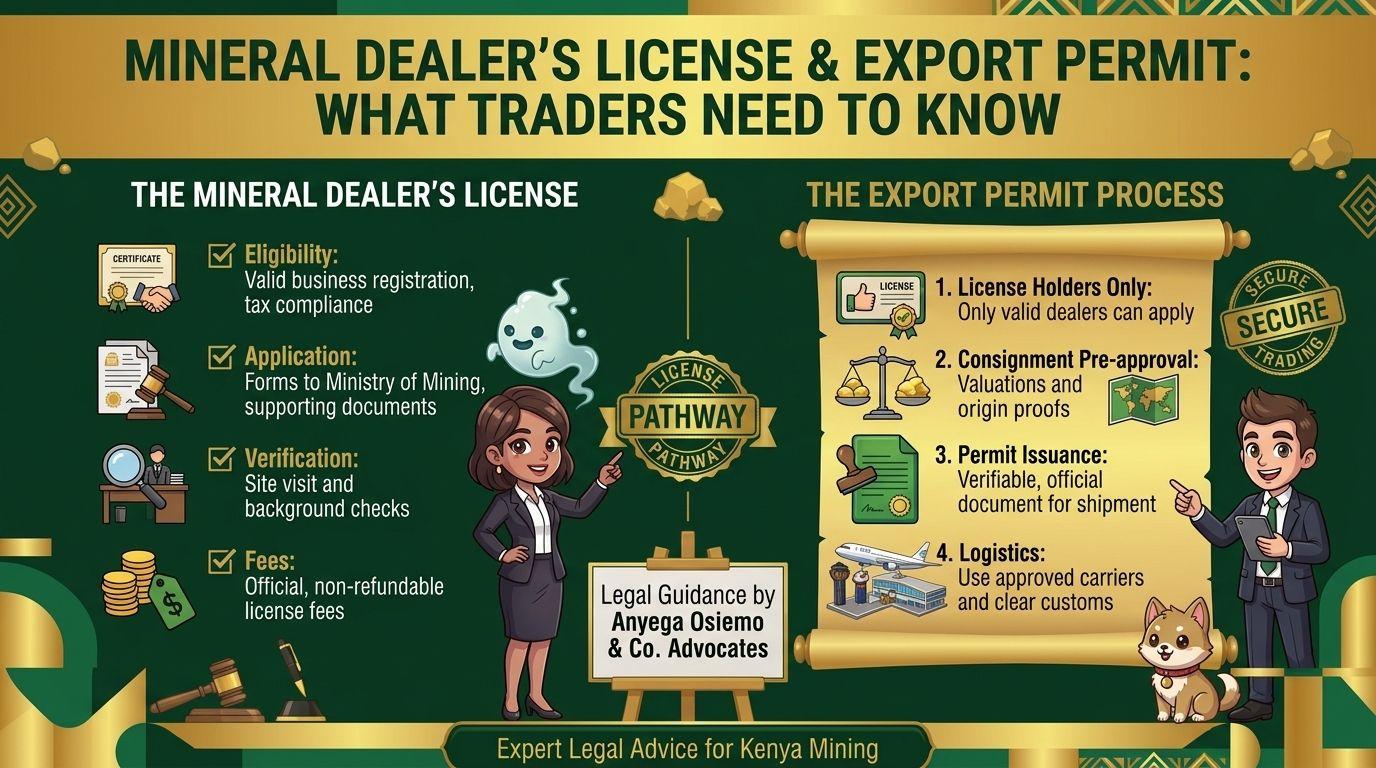
Dealing: buying, selling, or trading in minerals. Requires a mineral dealer's license, issued under the mining framework. This is the license that makes a trader legitimate: it registers you with the state, subjects you to record-keeping obligations, and separates you on paper and in practice from the fraud networks that dominate the informal trade.
Exporting: removing minerals from Kenya. Requires an export permit from the Ministry, separate from and in addition to the dealer's license. Holding a dealer's license authorizes domestic trading; each export consignment requires its own export authorization.
One sentence to remember: you need the dealer's license to trade, and an export permit to ship. A trader exporting without either document is operating illegally and, in the current enforcement climate, visibly so.
The Dealer's License: What It Involves
The mineral dealer's license is deliberately accessible, the state's answer to the reality that most of Kenya's gold moves through informal channels. The official costs are modest: a license fee of KShs 20,000 with an annual permit of KShs 2,000, valid for a calendar year.
Accessibility does not mean informality. License holders take on real obligations:
- Records of transactions: what was bought, from whom, in what quantity, at what price
- Declared premises dealing from registered premises, not hotel lobbies and car parks
- Compliance with regulatory oversight inspection, reporting, and the conditions attached to the license
The record-keeping obligation deserves emphasis. It is what distinguishes a licensed dealer from a fence: the ability to show the source of every kilogram sold. Buyers, banks, refiners, and increasingly foreign partners all demand this chain; the dealer who cannot produce it finds the legitimate trade closed to them, whatever their license says.
The Export Permit: Per-Consignment Authorization
Exporting minerals from Kenya requires an export permit issued through the Ministry's processes applied for per consignment or, as the framework provides, against documentation of the mineral's lawful origin and the exporter's status.
What this means practically for traders and exporters:
- Origin documentation is the battleground. An export permit application supported by proper purchase records from licensed sources moves; applications that cannot show where the gold came from stall or attract the wrong kind of attention.
- The paperwork is where scams are caught and made. Legitimate exporters produce genuine permits; fraud networks forge them. The forged "export permit fee" that fake dealers charge their victims has no connection to the official process for obtaining export permits through the Ministry, which uses real documentation and is paid through official channels.
Foreign buyers should note that verifying an exporter's license status and the authenticity of export documentation is a routine check that your Kenyan lawyer can perform before any funds are transferred.
The Compliance Obligations That Follow
Holding the license is the beginning, not the end:
- Renew annually. The license runs on a calendar-year cycle; letting it lapse mid-deal creates exactly the exposure the license exists to prevent.
- Keep the records. Transaction books, supplier identities, weights, and values are maintained contemporaneously and are retrievable on demand.
- Deal through traceable channels. Bank transactions, documented purchases, declared premises. The license holder who transacts in cash in a car park has converted their license into a decoration.
- Mind the overlaps. Mining rights held by suppliers, land questions around collection sites, county-level requirements: a trader's compliance file extends beyond their own license.
Why the License Is Commercially Valuable
Beyond legality, the dealer's license is becoming a market access document. Formal buyers, refiners, bullion banks, and international traders increasingly transact only with licensed, documented sources, driven by their own compliance obligations around provenance and anti-money-laundering. The informal trader's discount is real, but so is the informal trader's ceiling: the formal trade does not take their calls.
In short: the license is cheap, the obligations are manageable, and the commercial doors it opens are the ones that matter.
Frequently Asked Questions
Q1. Do I need a mineral dealer's license to buy gold from artisanal miners in Kenya?
A. Yes. Buying minerals for resale without a dealer's license is unlawful dealing, regardless of the quantities involved.
Q2. Can I export gold with only a dealer's license?
A. No. Exporting requires an export permit from the Ministry in addition to the dealer's license. The two authorize different things.
Q3. How do I verify that a trader's license is genuine?
A. Through the Ministry's official records, using channels your lawyer can access, never by accepting documents at face value from the trader themselves.
Q4. What happens if I deal or export without a license?
A. Unlicensed dealing and unauthorized export are offenses under the mining framework, with exposure to prosecution and seizure. The penalties are not the worst part; the reputational and commercial consequences end trading careers.
Disclaimer: This article is general legal information, not legal advice. For guidance on your specific situation, book a consultation with our advocates.