Eight months before his resignation sent shockwaves through the tech world, Nvidia co-founder Jensen Huang and his wife Lori completed one of the largest family wealth transfers in modern history. In March 2026, roughly 59 million Nvidia shares, worth more than $10.5 billion, were transferred into the Huang Irrevocable Remainder Trust, a family trust structured to benefit the couple’s two children.
The remarkable part? Not the size, but the timing. The transfer was set in motion in 2016, when Nvidia was still primarily a gaming-chip company, and the shares placed into trust were worth about $51 million. A decade later, those same shares had grown more than 200-fold in value, and under the structure the Huangs used, the entire appreciation passed to the next generation free of US federal estate tax.
How is that possible? And what does an American billionaire’s tax strategy have to do with your land in Kisii, your family business in Nairobi, or your investments abroad? More than you might think. Here is what happened, why it is entirely legal, and the estate planning lessons Kenyan families and business owners should take from it.
What Happened: The Timeline of Jensen Huang’s $10.5 Billion Trust Transfer
- March 2016: Jensen and Lori Huang funded two 10-year grantor retained annuity trusts (GRATs) with approximately $51 million in Nvidia shares. They set up two additional GRATs with shorter terms around the same period.
- March 18, 2026: The two 10-year trusts terminated as scheduled. Each distributed 29,481,301 shares (58,962,602 shares in total, worth over $10.5 billion) into the Huang Irrevocable Remainder Trust. The gain over the decade: approximately 22,161%.
- November 12, 2026: Huang resigned as Nvidia’s president, CEO and board member amid revelations of extramarital relationships, including one with an executive suspected by US intelligence of links to Chinese intelligence. CFO Colette Kress was appointed interim CEO.
Social media has been quick to connect the March transfer to the November scandal. The facts don’t support that narrative: the trust’s end date was fixed in 2016, long before anyone could have predicted the events of 2026. What the story really illustrates is something far more useful: the power of planning early and letting time do the work.
GRAT Trust Explained: The Estate Planning Tool Behind the Transfer
A GRAT (grantor retained annuity trust) is a US estate-planning tool recognized by the Internal Revenue Service. The mechanics, in simple terms:
- You place assets (here, shares) into a trust.
- The trust pays you back an annuity over a fixed term calculated to return roughly the original value plus a modest IRS-set interest rate.
- Because you are effectively getting back what you put in, the taxable value of the “gift” to your heirs at the start is close to zero.
When the term ends, any remaining growth in the trust passes to your beneficiaries free of gift and estate tax.
The risk? If the assets underperform the IRS rate, nothing meaningful will remain for the family, and a 10-year term is a long time to bet on a single stock. As one Boston trusts-and-estates lawyer told Barron’s, the 10-year choice reflected extraordinary confidence in the company. Most GRATs run two to four years precisely because decade-long bets are rare.
Huang’s bet paid off spectacularly. The strategy is aggressive but entirely lawful, which is precisely the point. Good estate planning is not about hiding wealth; it is about structuring it, in advance, under rules everyone can access.
Estate Planning in Kenya: What Kenyan Families Should Take from This
Kenya’s legal landscape differs from America’s in important ways, but the underlying principles of estate planning in Kenya transfer directly.
Is there inheritance tax in Kenya?
No. Kenya’s Estate Duty Act has been suspended since 1982, so there is currently no inheritance or estate tax in Kenya. But do not let that lull you into thinking succession planning is unnecessary. The real costs of dying without a plan in Kenya are:
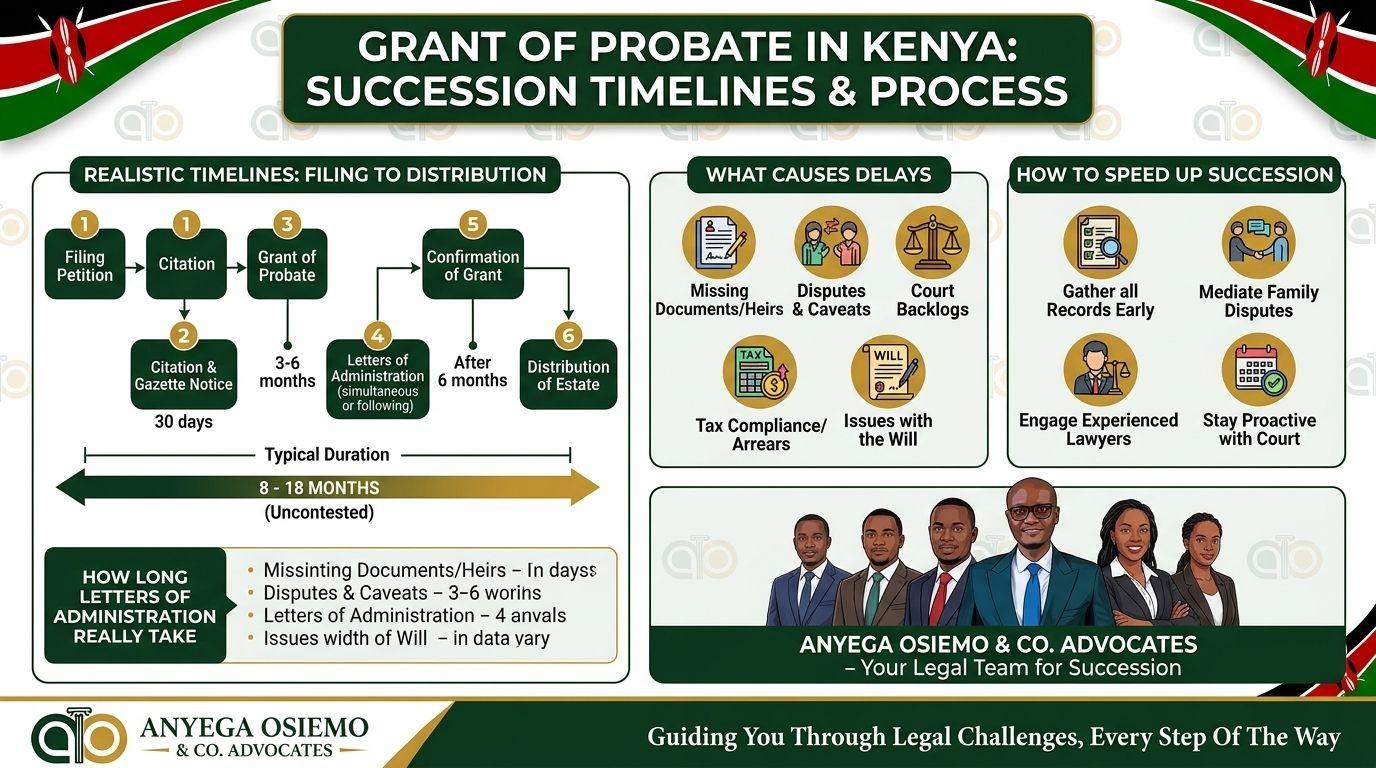
- Probate delays - Without a valid will, your estate passes under the intestacy rules of the Law of Succession Act (Cap 160), a process that routinely takes years, freezing land titles, bank accounts and business shares your family depends on.
- Family disputes - Matrimonial property claims, competing beneficiaries and second-family complications consume estates from within, often destroying more value than any tax ever would.
- Costs on the way in, not the way out - Moving assets into a trust in Kenya attracts capital gains tax (currently 5%, with related-party transfers assessed at market value) and potentially stamp duty, and trust income is taxed. Planning the sequence and timing of transfers with an advocate is essential.
Estate planning tools available under Kenyan law
You do not need a Nevada trustee or a US tax code. The Kenyan equivalents that achieve much of the same outcome:
- A valid, professionally drafted will with executors you trust. This is the foundation on which everything else sits.
- A family trust under the Trustees Act (Cap 167)or a registered trustees structure is one of the most effective trusts in Kenya for holding assets for children, protecting vulnerable beneficiaries, and keeping family wealth out of the probate process.
- Family holding companies for business families —separating ownership (the family) from management (the founders), just as Nvidia’s structure separated Huang’s personal wealth from the company.
- Insurance and pension nominations — the most neglected estate planning tool in Kenya. These pass outside the estate entirely if properly designated, giving your dependants immediate liquidity while probate runs its course.
How to avoid probate delays and estate disputes in Kenya
The Huangs’ outcome depended entirely on acting in 2016, when the shares were cheap, and nobody was watching. Wealth transferred early when values are modest, and family relationships are calm, is always easier, cheaper, and cleaner than wealth scrambled into place during a crisis. The families we see in protracted succession disputes are almost always the ones that treated planning as something to do “later.”
Succession Planning for Family Businesses in Kenya
Nvidia’s crisis also holds a corporate lesson. By all accounts, Huang ran an intensely founder-centered company; more than 60 executives reported directly to him, and there was never a designated successor. Within four days of the board opening an investigation, he was gone, and the company survived largely because a credible internal successor (the CFO) could step in immediately.
Most Kenyan family businesses are far more founder-dependent than Nvidia ever was and far less prepared. If your company would struggle to answer “who signs if something happens to the founder tomorrow?”, that is a shareholder agreement problem, and it is cheaper to fix today than in a crisis. Proper succession planning in Kenya means a shareholder agreement with clear succession and deadlock provisions, a family constitution where appropriate, and key-person insurance.
Frequently Asked Questions
Q1. Is there inheritance tax in Kenya?
A. No. Estate duty has been suspended in Kenya since 1982. However, transfers of assets into trusts attract capital gains tax (5%) and possibly stamp duty, and trust income is taxed, so the structure must be carefully planned with an advocate.
Q2. What is a family trust in Kenya?
A. A family trust is a legal arrangement, typically governed by the Trustees Act (Cap 167), under which trustees hold and manage assets for the benefit of named beneficiaries — such as your children. Assets in a properly constituted trust do not pass through probate, which protects them from both delay and dispute.
Q3. What happens if I die without a will in Kenya?
A. Your estate is distributed under the intestacy provisions of the Law of Succession Act, which may not reflect your wishes, and someone must apply for letters of administration, a process that routinely takes years. A professionally drafted will avoids this.
Q4. How long does probate take in Kenya?
A. With a valid will and proper documentation, the grant of probate typically takes months; contested or intestate estates can take several years. This is why trusts and nominations that pass outside the estate matter so much.
Disclaimer: This article is general legal information, not legal advice. For guidance on your specific situation, book a consultation with our advocates.